Neonatal Seizures: A Critical Red Flag for Brain Injury
When a baby is born, the expectation is a transition marked by a healthy cry and the beginning of a lifelong bond. However, for many families, this moment is shattered by the onset of neonatal seizures. In the high-stakes environment of labor and delivery, seizures occurring within the first days of life are rarely ‘unfortunate accidents.’ Instead, they are often a glaring “red flag”—a clinical manifestation of underlying neurological trauma that medical providers frequently should have prevented through proper monitoring and intervention.
At the intersection of medicine and law, neonatal seizures serve as a primary indicator that a baby has suffered a significant birth injury. These events are often the direct result of oxygen deprivation (hypoxia) or physical trauma during birth. When hospitals fail to recognize these signs or ignore the fetal distress that preceded them, the window for protecting the child’s brain health begins to close, often leading to a lifetime of disability.
The Biological Reality: Seizures as a Symptom of Brain Injury
It is a common misconception that neonatal seizures are a standalone disease. In reality, a seizure is a symptom—it is the brain’s way of signaling that its electrical system has been disrupted by an acute insult. In a newborn, the most common cause of this disruption is Hypoxic-Ischemic Encephalopathy (HIE).
HIE occurs when a baby’s brain is deprived of oxygen-rich blood during the labor and delivery process. This deprivation triggers a cascade of cellular death. As brain cells (neurons) die or become severely stressed, they lose the ability to regulate their electrical impulses. This results in the abnormal, disorganized electrical activity we recognize as a seizure. While HIE is the most common cause of neonatal seizures, clinicians must also evaluate other potential causes including intracranial hemorrhage, neonatal stroke, metabolic disorders, genetic conditions, and perinatal infections — some of which are not related to labor and delivery management. When a legal investigation into HIE and seizures in newborns begins, the focus is almost always on whether the medical team failed to act before the brain reached this breaking point. For a deeper look at this diagnosis, see our overview of HIE and birth injuries.
The Chain of Negligence and Fetal Distress
The path to neonatal seizures often begins long before the baby is born. The medical standard of care requires obstetricians and labor and delivery nurses to adhere to strict monitoring protocols designed to catch distress before it becomes a permanent injury. When these duties are breached, the baby is left to suffer in utero, and the seizures that follow birth are essentially the “smoke” indicating that a “fire” occurred during delivery. Common errors in this chain of negligence include:
- Failure to Monitor Fetal Heart Rate: Identifying “non-reassuring” heart rate patterns that indicate the baby is struggling and needs immediate delivery. You can learn more about how these errors occur in our guide to Fetal Monitoring Errors.
- Failure to Respond to Placental Issues: Recognizing signs of placental abruption or insufficiency that cut off the baby’s vital oxygen supply.
- Negligent Labor Management: Ensuring that labor does not become so prolonged or traumatic that it causes physical compression of the fetal head or umbilical cord.
When a physician fails to order a timely Cesarean section despite clear evidence of fetal distress, they are essentially gambling with the infant’s neurological future. The resulting seizures are not just a medical complication; they are often evidence of birth injury malpractice—a window of opportunity that was missed by the delivery team. This is a common theme in cases involving delayed C-sections and brain damage.
The Critical 48-Hour Window: Why Immediate Action is Mandatory
The first hours of a newborn’s life represent a critical treatment window. According to clinical guidelines from the American Academy of Pediatrics, therapeutic hypothermia (brain cooling) for HIE must be initiated within 6 hours of birth to be effective — after this window, the neuroprotective benefit is significantly reduced. This extremely narrow timeframe makes rapid identification and response to birth-related neurological injury essential. Because the neonatal brain is still developing, the metabolic crisis triggered by a seizure can cause “secondary” brain damage if it is not halted immediately. Many parents ask, “Why was my baby cooled?“—the answer often points back to an unaddressed injury during labor.
The Hospital’s Duty to Identify Symptoms
Hospital staff are trained to look for “subtle” seizures, which may not look like the generalized shaking seen in adults.Because the newborn brain is still developing — with immature cortical organization, incomplete myelination, and an imbalance of excitatory versus inhibitory neurotransmission — electrical discharges may not spread across the entire motor cortex in the way they would in an adult brain, resulting in fragmented or unusual physical behaviors. In newborns, symptoms of seizures may manifest as:
- Repetitive “bicycling” movements of the legs or “rowing” movements of the arms.
- Staring spells, rhythmic eye deviations, or rapid blinking.
- Apnea or sudden, unexplained periods where the baby stops breathing.
- Lip smacking, tongue thrusting, or rhythmic chewing movements.
A failure to diagnose these symptoms is a direct failure of the medical team. When a baby has a history of a difficult delivery, low Apgar scores, or required resuscitation at birth, the medical team is on “high alert” status. Ignoring or misclassifying seizure activity during this critical time is a deviation from the standard of care that can lead to catastrophic, lifelong consequences.
The Role of Continuous Monitoring (EEG)
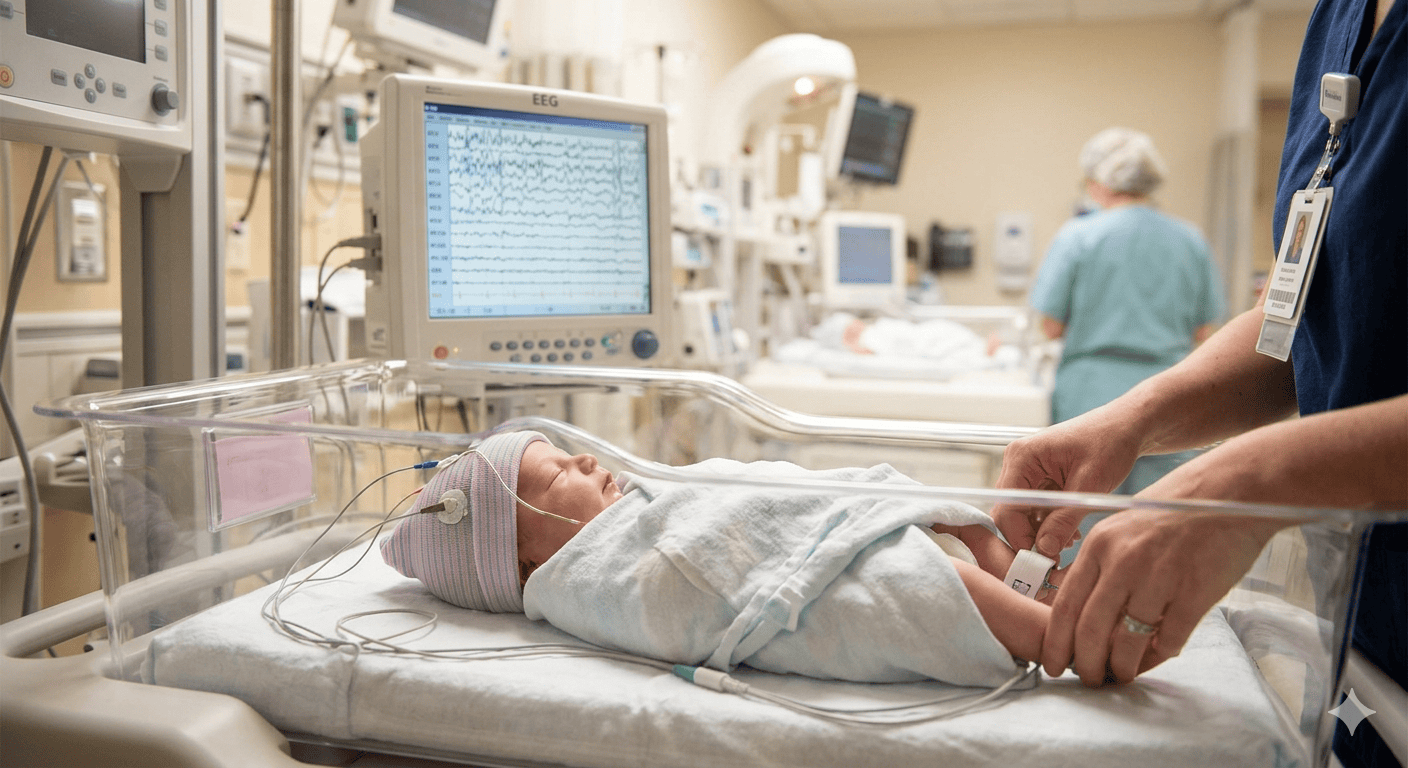
Because neonatal seizures are often “subtle” or “silent”—meaning they occur in the brain without outward physical signs—the standard of care for at-risk infants often requires continuous Video EEG monitoring. Studies have shown that a significant percentage of neonatal seizures are subclinical; they are happening electrically even when the baby appears to be resting quietly. A hospital that fails to utilize this technology for a baby showing signs of neurological distress is essentially “flying blind,” allowing further brain damage to occur undetected and untreated.
Long-Term Consequences of Delayed Identification
When neonatal seizures are not identified and managed immediately, the injury to the brain often progresses from an acute event into a permanent disability. The human and financial toll on the family is staggering, as the child may require around-the-clock care, specialized equipment, and intensive therapy for the rest of their life.
- Cerebral Palsy (CP): Many infants who experience neonatal seizures due to birth-related HIE will go on to develop Cerebral Palsy from birth negligence, a group of disorders that affect motor function and muscle tone. Learn more about legal options for cerebral palsy.
- Developmental and Cognitive Delays: Oxygen deprivation often targets the regions of the brain responsible for language, memory, and executive function, leading to profound learning disabilities.
- Chronic Epilepsy: A brain that is “re-wired” by early-life trauma is significantly more likely to suffer from chronic seizure disorders throughout childhood and adulthood.
- Visual and Hearing Impairments: The same neurological trauma that triggers seizures can damage the pathways responsible for processing sensory information.
Why Early Identification is a Matter of Malpractice
In some cases, neonatal seizures may be the result of a preventable injury, particularly where evidence shows that timely intervention was not performed. If the medical team had performed a timely C-section, properly interpreted fetal heart strips, or managed a high-risk pregnancy with the required diligence, the brain injury might never have happened. When we investigate these cases, we often find a pattern of hospital neglect rooted in systematic failures.
These failures often include understaffing, where nurses are spread too thin to notice a baby’s subtle seizure activity, or a lack of specialized training for neonatal staff. Furthermore, communication failures between the nursing staff and the attending physician often result in a “wait and see” approach that is deadly for a brain-injured infant. Every minute that a seizure goes untreated or a hypoxic event continues in the womb, thousands of brain cells are lost forever.
Holding Hospitals Accountable for Brain Health
The birth of a child should be a beginning, not the start of a struggle for survival. If your child suffered neonatal seizures and was later diagnosed with HIE, Cerebral Palsy, or developmental delays, it is essential to look back at the labor and delivery records.
Neonatal seizures are a biological signal that something went wrong. Often, that “something” was a preventable error by the people you trusted most. Families deserve to know the truth about what happened in the delivery room and have the right to seek the resources necessary to provide their child with the best possible future.
If your child experienced seizures shortly after birth, it is vital to act quickly. Medical records must be preserved, and the timeline of events must be scrutinized by experts who understand the link between birth trauma and neonatal neurological health.
Powless Law Firm, P.C. has over 20 years of experience representing families in complex birth injury and medical malpractice cases. We understand the technical nuances of electronic fetal monitoring and the protocols required for high-risk deliveries. If you believe a preventable medical error harmed you or your baby, you deserve answers and a path to justice. Contact us today for a free, confidential case evaluation.
The Powless Law Firm is an Indiana law firm that represents victims and families statewide in serious cases involving birth injury, medical negligence, personal injury, nursing home neglect, and wrongful death. If you have concerns about nursing home negligence, please contact us at (877) 469-2864. Together, we can make a difference.
The Powless Law Firm represents families across Indiana—from Indianapolis to Fort Wayne and Evansville—in cases involving birth trauma lawsuits, medical malpractice birth injury claims, and cerebral palsy lawsuits. As experienced medical malpractice attorneys in Indiana, we are here to listen to your story and help you find the way forward.
Call (877) 469-2864 now for a free, confidential consultation. There is no fee unless we win your case.