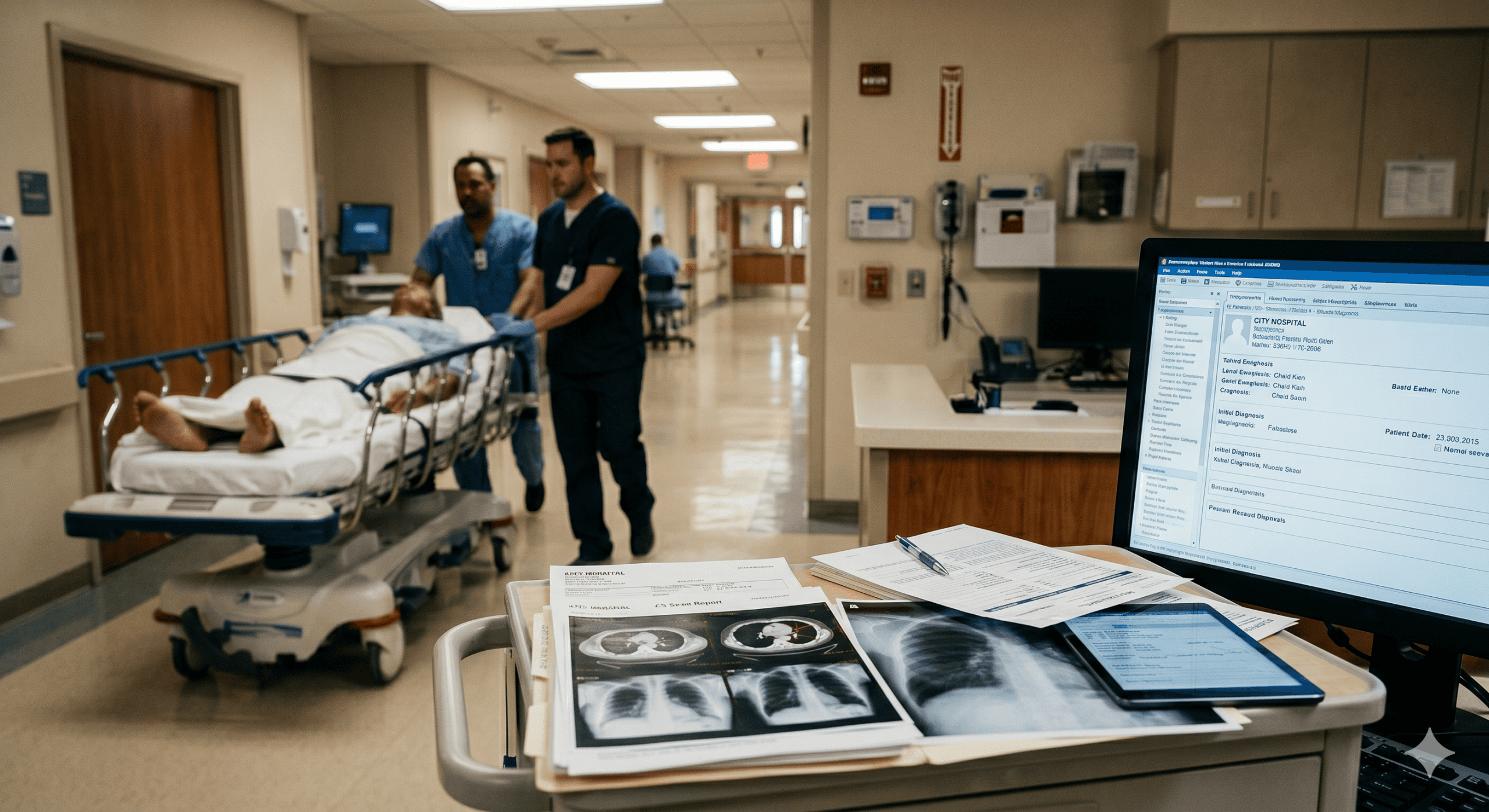
ER Aortic Dissection Misdiagnosis: The Reflux Excuse
Introduction
An aortic dissection is one of the most catastrophic medical emergencies a person can experience. The aorta, the body’s primary blood vessel, carries oxygen-rich blood from the heart to the rest of the body. When a tear occurs in the inner layer of this massive artery, blood forces its way between the tissue layers, tearing them apart in a process known as dissection. For most patients, this manifests as a sudden, excruciating, “tearing” or “ripping” pain in the chest or back.
It is a straightforward, well-documented medical emergency. However, there are devastating instances when an aortic dissection is completely missed, misdiagnosed, or dismissed in the emergency room (ER) or urgent care clinic. Instead of receiving life-saving surgical intervention, patients are all too frequently sent home with antacids for “gastric reflux,” muscle relaxants for a “pulled back muscle,” or sedatives for “anxiety.”
When this medical blind spot occurs, the results are almost universally fatal. Deprived of immediate surgical or medical treatment, the blood pressure builds within the torn arterial wall until the aorta suffers a catastrophic, fatal rupture. For families left shocked by the sudden loss of a loved one who had just sought medical help hours prior, finding out that a simple, widely available test could have saved their life turns grief into a search for answers—and accountability.
Understanding the Anatomy: The Progression of an Unrecognized Aortic Emergency
An aortic dissection begins when high blood pressure, genetic conditions, or underlying tissue weakness causes a physical rip in the tunica intima, the smooth innermost lining of the vessel. In a healthy aorta, the inner, middle, and outer layers of tissue remain tightly bound to safely channel blood flow. However, during a dissection, blood pumping directly from the heart enters this newly formed rip under extreme, dynamic pressure, forcibly separating the tunica intima from the muscular tunica media. This destructive separation creates what is known as a “false lumen”—an unnatural, secondary channel where high-pressure blood becomes trapped and actively strips the delicate structural layers of the arterial wall apart.
This progressive tearing compromises the structural integrity of the entire vessel, turning a localized injury into a systemic crisis. The critical turning point of this emergency depends entirely on where this initial tear occurs and how quickly the dissection propagates along the length of the aorta. To guide rapid clinical decision-making under tight timelines, doctors classify these life-threatening events using the Stanford Classification system, which categorizes the dissection based on its anatomical location to dictate the immediate medical or surgical path required to save the patient’s life.
Stanford Type A: An Immediate Surgical Emergency
Type A dissections involve the ascending aorta closest to the heart. These are immediate, high-priority surgical emergencies. Because the tear originates so close to the heart, it can quickly tear backward into the aortic valve, causing acute heart failure. Alternatively, it can bleed directly into the pericardial sac surrounding the heart, causing cardiac tamponade, a condition where blood accumulates in the pericardial sac and compresses the heart, severely impairing its ability to fill and pump blood effectively, and rapidly leading to circulatory collapse and death. Furthermore, a Type A dissection can shear off the main carotid arteries, starving the brain of oxygenated blood and triggering a massive stroke.
Stanford Type B: A Managing yet Volatile Crisis
Type B dissections involve the descending aorta, moving down toward the chest and abdomen. While these are sometimes initially managed in an intensive care unit using aggressive intravenous medications to lower blood pressure, they still carry an immense, unpredictable risk. A Type B dissection can propagate rapidly, cutting off circulation to critical organs—including the kidneys, intestines, and spinal cord—or tearing completely open without warning.
Regardless of the classification, the window for effective medical intervention is exceptionally narrow. Clinical literature has long established a terrifying metric: for untreated acute Type A aortic dissections, the mortality rate increases by 1% to 2% every single hour after the onset of symptoms. Within 24 hours, approximately one-third of patients (around 33%) will die; within 48 hours, that number climbs to nearly 50%. What begins as a localized, highly treatable arterial tear can progress to an irreversible systemic rupture and sudden death if ER physicians lean on common, benign explanations instead of ruling out this “can’t-miss” emergency.
Red Flags and “Can’t-Miss” Symptoms
While anyone can suffer an aortic dissection, certain presenting symptoms are classic indicators that demand immediate, high-priority investigation. A failure to appropriately recognize these red flags is a common component of emergency room medical malpractice.
Families often recall their loved ones describing specific, severe symptoms that should have triggered immediate alarms in any competent medical facility:
- Sudden, Hyper-Acute Pain: Unlike the gradual, heavy pressure of a typical heart attack or the burning discomfort of acid reflux, aortic dissection pain is “hyper-acute.” It hits like a thunderclap, reaching maximum, agonizing intensity the exact second it begins.
- “Tearing,” “Ripping,” or “Stabbing” Sensations: Patients frequently use these precise, visceral words to describe their distress. The pain is rarely described as dull, mild, or aching; it is felt as a literal physical tearing in the chest, upper back, or between the shoulder blades.
- Migrating Pain: As the blood forces its way down the length of the aorta, the pain can literally “move.” A patient may start by complaining of severe chest pain, which then shifts into the lower back, abdomen, or even the legs over the course of several hours. This migration is a textbook hallmark of a propagating dissection.
- Pulse and Blood Pressure Asymmetry: Because the tearing of the artery walls can compress branching blood vessels, it often cuts off blood flow to one side of the body. A stark difference in blood pressure or pulse strength between the right and left arms, or a cold, weak pulse in one leg, is an immediate indicator of a vascular emergency.
- Neurological Symptoms or Syncope: Sudden dizziness, a temporary loss of consciousness (syncope), vocal hoarseness, numbness, or stroke-like symptoms appearing concurrently with chest or back pain indicate that the dissection is actively starving the brain or spinal cord of oxygenated blood.
Why the Misdiagnosis Happens: The Gastric Reflux Excuse
Tragedy often strikes not because an aortic dissection is inherently untreatable, but because of cognitive biases, systemic emergency room failures, and human error. In the context of fatal aortic ruptures, negligence often stems from specific clinical pitfalls:
1. Anchor Bias and the “Easy” Diagnosis
Emergency rooms are fast-paced, high-stress environments where triage protocols are optimized for the most common ailments. When a patient presents with chest pain, ER staff are trained to look for the most common cardiac culprit first: a standard heart attack (acute myocardial infarction).
If an electrocardiogram (EKG) shows no obvious signs of a heart attack and cardiac enzyme blood tests (such as troponin levels) come back normal — or are only mildly abnormal and attributed to a different cause — physicians frequently fall victim to anchoring bias. Instead of expanding their search to other deadly causes, they “anchor” to the fact that the heart tests are clear and prematurely conclude that the pain must be benign. They settle on common, low-risk diagnoses like gastroesophageal reflux disease (GERD), gastritis, an esophageal spasm, or an anxiety panic attack, and administer a “GI cocktail” (an antacid mixed with liquid lidocaine). What makes this bias particularly dangerous is that troponin can be elevated in a significant minority of aortic dissection patients due to coronary involvement — a finding that may actually reinforce an incorrect heart attack diagnosis rather than prompt the physician to look further.
2. The Failure to Order a Simple CT Angiogram (CTA)
This is the ultimate clinical failure in aortic dissection malpractice cases. While a standard chest X-ray is almost always ordered for chest pain, it is completely inadequate for ruling out an aortic dissection. A chest X-ray can sometimes show a ‘widened mediastinum’ (the area around the heart and major vessels), but it is a highly unreliable screening tool. Clinical studies show that up to one-third of aortic dissection patients have a chest X-ray that appears completely normal to the examining physician, and the widened mediastinum finding — the primary visual clue — is absent in over one-third of confirmed Type A dissection cases.
The gold standard for diagnosing an aortic dissection is a Computed Tomography Angiogram (CTA) of the chest and abdomen. A CTA uses a rapid injection of contrast dye to completely illuminate the blood flow through the aorta, making a tear instantly visible to a radiologist. A CTA is a widely available, non-invasive imaging test that can be completed in less than ten minutes in virtually any modern hospital. Failing to order a CTA when a patient presents with sudden, severe, or migrating chest and back pain—especially when initial heart attack tests are negative—represents a direct deviation from the standard of care.
3. Misinterpreting Atypical Risk Profiles
Physicians sometimes talk themselves out of life-saving diagnostic tests because the patient doesn’t fit the “classic” demographic profile. Textbooks often describe the typical aortic dissection patient as an older male with a decades-long history of severe, uncontrolled hypertension or a known genetic tissue disorder like Marfan syndrome.
When women, younger individuals, or patients without a known history of high blood pressure present with these exact symptoms, their complaints are disproportionately dismissed. Young women experiencing an aortic dissection are frequently told they are having a panic attack, hyperventilating, or experiencing a musculoskeletal strain from working out. This demographic bias leads to fatal discharge errors, sending high-risk patients out into the hospital parking lot with a death sentence.
The Catastrophic Cost of Delay
When an aortic dissection is misdiagnosed as gastric reflux and the patient is discharged, the clock begins ticking toward a predictable medical catastrophe. The patient is sent home and told to rest, take antacids, or take an anti-anxiety medication. Meanwhile, their blood pressure remains completely unmanaged. Every single beat of their heart hammers against the already weakened, torn wall of their aorta.
Within hours or days, the outer layer of tissue (tunica adventitia) can no longer withstand the immense, unrelenting pressure. The aorta suffers a catastrophic rupture. When the aorta ruptures, massive internal bleeding occurs into the chest or abdominal cavity, and death is almost instantaneous.
For the family members who are present, the experience is profoundly traumatic. They watch a loved one—who was just examined by a medical professional and pronounced “fine”—suddenly collapse, lose consciousness, and pass away before emergency medical services can even arrive.
Pursuing a Wrongful Death Claim for Aortic Malpractice
When a patient is sent home from an ER with antacids or anxiety medications and subsequently suffers a fatal aortic rupture, their surviving family members are left dealing with a catastrophic, entirely preventable tragedy. Pursuing a medical malpractice or wrongful death claim is often the only way for families to find the truth, hold negligent providers accountable, and prevent similar errors from happening to other families. This is typically handled by your attorney.
To successfully build an aortic dissection negligence claim, several foundational legal criteria must be met. First, your legal team must establish a formal duty of care, proving that a doctor-patient relationship existed in the ER, urgent care, or hospital setting, which legally obligated the medical staff to provide competent, thorough care. Once this duty is established, the case hinges on proving a breach of duty—demonstrating that the healthcare providers deviated from the accepted medical standard of care. This requires showing that any reasonable, competent physician faced with the patient’s severe, sudden, or migrating symptoms would have included aortic dissection in their differential diagnosis and ordered a definitive chest CTA.
Once a breach is shown, the legal team must establish causation by utilizing expert medical testimony to prove that the failure to diagnose directly caused the patient’s wrongful death. This involves demonstrating that had the providers ordered the appropriate scan and correctly diagnosed the dissection, timely surgical or medical intervention would have given the patient a high probability of survival. Finally, the claim must quantify the damages, illustrating the profound human and financial losses suffered by the surviving family. This typically includes funeral expenses, lost financial support, medical bills incurred prior to death, and the deep, irreplaceable loss of companionship and love.
Seeking Clarity, Accountability, and Answers
The sudden loss of a loved one to a ruptured aorta—especially when they actively sought help, begged for relief from excruciating pain, and were turned away with reassurance and a prescription for reflux—leaves families in a state of profound shock, anger, and disbelief.
During this devastating time, securing a clear, unredacted copy of the complete medical records, ER triage notes, nursing charts, and any imaging files is the essential first step toward finding clarity. This is typically handled by your attorney. Hospitals rarely admit to these diagnostic blunders voluntarily; instead, they often frame the death as an “unforeseeable, sudden cardiac event” to shield themselves from liability.
If you suspect that an emergency room or urgent care center missed the critical red flags of an aortic dissection and relied on an easy excuse like gastric reflux or anxiety to discharge your loved one, you do not have to search for answers alone. Consulting with an experienced medical malpractice legal professional can help your family evaluate the timeline, cut through complex medical jargon, consult independent medical experts, and determine the best path forward to ensure justice and accountability are served. This is typically handled by your attorney.
Frequently Asked Questions (FAQs)
How can ER doctors tell the difference between a heart attack and an aortic dissection?
While both medical emergencies cause severe chest pain, their underlying causes and diagnostic markers are entirely different. A heart attack is caused by a blockage in blood flow to the heart muscle, which can generally be detected through an electrocardiogram (EKG) and blood tests measuring cardiac enzymes like troponin. An aortic dissection is a structural tear in the body’s main artery. Unlike a heart attack, aortic dissection has no single definitive blood test or EKG finding — but critically, these tests are not reliably normal either. Research shows that troponin levels can be elevated in anywhere from 25% to 50% of aortic dissection patients, and abnormal EKG findings including patterns resembling a heart attack are present in a significant portion of cases, particularly with Type A dissections. This overlap makes the condition especially prone to misdiagnosis. ER doctors must recognize that the results of standard cardiac tests, whether normal or abnormal, do not rule out a life-threatening aortic dissection, and they must proceed with further diagnostic imaging whenever clinical symptoms particularly sudden, tearing, or ripping chest or back pain suggest a vascular emergency.
Why does a standard chest X-ray fail to diagnose an aortic dissection?
A standard chest X-ray is a basic, two-dimensional image that is insufficient for evaluating detailed blood flow or arterial tearing. While a chest X-ray can sometimes show secondary clues of a dissection, such as a ‘widened mediastinum’ (the area containing the heart and major vessels), it misses approximately one-third or more of active aortic dissections. Clinical data show that the widened mediastinum sign is absent in more than one-third of confirmed Type A cases, and overall chest X-ray sensitivity for aortic disease is only around 64%, meaning it fails to detect the condition in roughly 36% of patients. Because a normal chest X-ray cannot safely rule out this “can’t-miss” diagnosis, relying on it as a definitive diagnostic tool is a dangerous clinical mistake. The definitive test is a Computed Tomography Angiogram (CTA) of the chest and abdomen.
Why is a “GI cocktail” sometimes used to justify discharging a patient with a tearing aorta?
In many malpractice cases, physicians rely on the “gastric reflux excuse” because they administered a gastrointestinal (GI) cocktail—a liquid mixture of antacids and a numbing agent like lidocaine—and the patient reported feeling slightly better. However, a patient’s overall pain levels may naturally fluctuate, or the numbing agent may temporarily mask the somatic chest pain. ER doctors commit a severe diagnostic error when they use a patient’s subjective, temporary response to acid reflux medication to rule out a major cardiovascular emergency, ignoring the presence of classic vascular red flags like sudden, ripping pain.
How do we prove that an ER’s failure to order a CT scan caused our loved one’s death?
Establishing causation in an aortic dissection wrongful death case requires proving that the patient would have had a high probability of survival if they had been diagnosed correctly in the ER. Your legal team must work with independent medical experts—such as emergency medicine physicians and cardiothoracic surgeons—to review the timing of the ER visit, analyze the specific symptoms documented in the nursing and triage charts, and establish that immediate surgical or medical intervention would have saved your loved one’s life. Investigating these complex medical timelines, securing expert testimony, and navigating the filing of a wrongful death claim are typically handled by your attorney.
Contact Powless Law Firm Today
The laws governing medical malpractice in Indiana are some of the most complex in the nation. At Powless Law Firm, we focus on helping victims navigate these hurdles to secure the maximum compensation allowed by law. We understand that while money cannot restore your health, it can provide the security and care you need to move forward.
If you believe you have been a victim of medical negligence, do not wait. Indiana has a strict two-year statute of limitations for most malpractice claims.
Contact the Powless Law Firm at (877) 769-5377 for a free, confidential consultation. Let us help you hold negligent providers accountable.
The Powless Law Firm represents families across Indiana—from Indianapolis to Fort Wayne and Evansville—in cases involving nursing home negligence lawsuits, birth trauma lawsuits, medical malpractice birth injury claims, and cerebral palsy lawsuits. As experienced medical malpractice attorneys in Indiana, we are here to listen to your story and help you find the way forward.
Call (877) 469-2864 now for a free, confidential consultation. There is no fee unless we win your case.