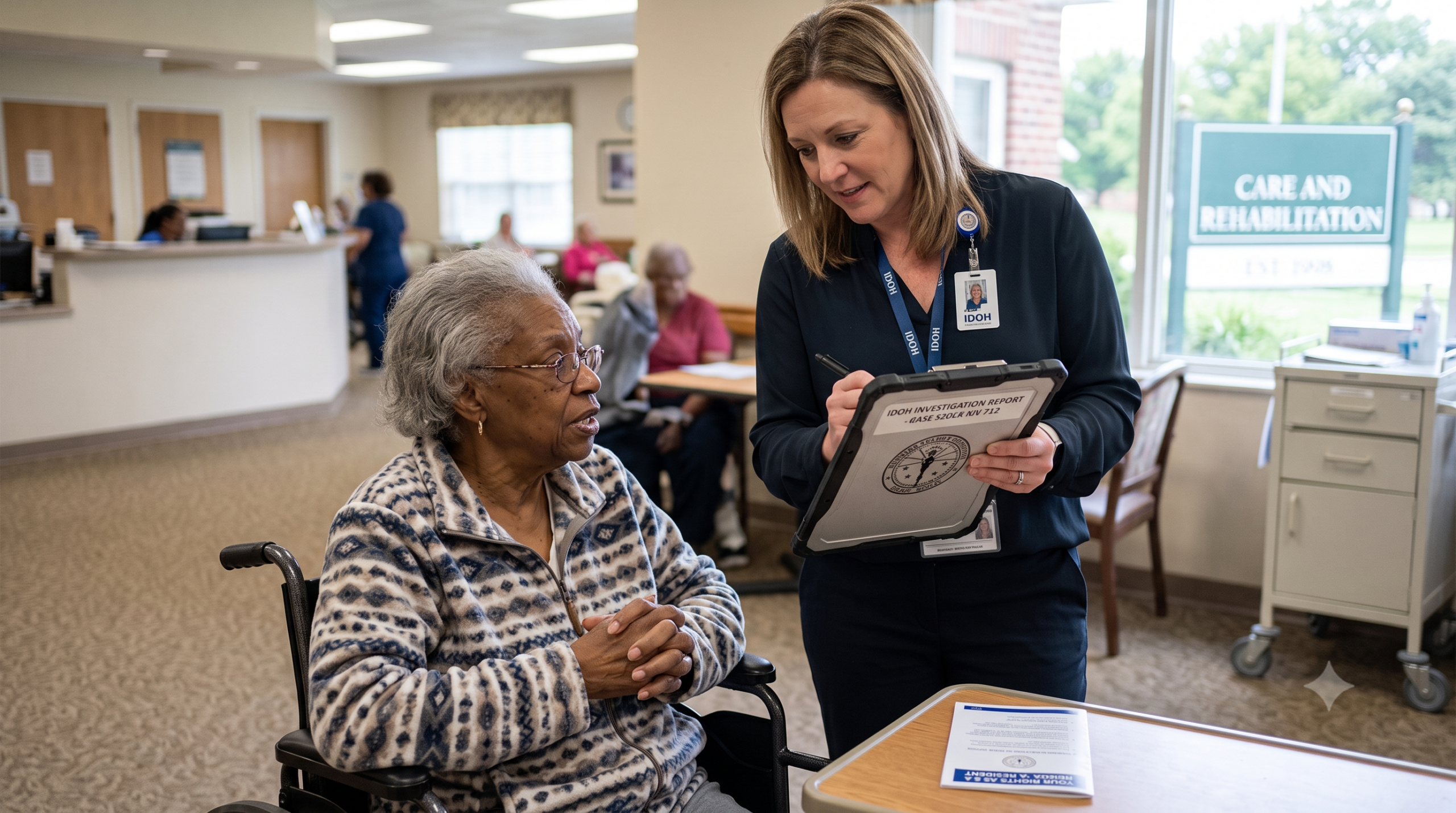
When a family member suspects that a loved one is experiencing abuse, severe neglect, or systemic mistreatment in an Indiana long-term care facility, the decision to file a formal nursing home complaint is often fraught with profound anxiety. Beyond the emotional weight of discovering that a vulnerable parent or grandparent has been harmed, families face a complex, daunting administrative maze.
Understanding exactly what happens after you submit an official Indiana Department of Health nursing home complaint is vital. Not only does this knowledge help you track the progress of the state’s intervention to ensure your loved one’s immediate safety, but it also helps build a strong, unimpeachable foundation for any future civil litigation or medical malpractice claims.
If you are currently navigating this stressful process, your most pressing question is likely: “What happens next, and how long does it take?” Because Indiana’s regulatory framework operates on strict, priority-based timelines, tracking the Indiana nursing home complaint timeline requires a comprehensive understanding of intake validation, unannounced facility surveys, federal deficiency classifications, and how these state actions intersect with Indiana personal injury and malpractice laws.
1. How to File an Indiana Department of Health Nursing Home Complaint
The regulatory clock does not begin until the complaint is officially filed. When families ask us, “how do i report a nursing home to the state of Indiana?” we advise them that how you file, and the depth of information you provide, heavily influences how quickly the state responds.
To properly report nursing home abuse or neglect in Indiana, families have three primary avenues to submit reports directly to the IDOH Division of Long Term Care. The most direct and trackable electronic method is utilizing the state’s online electronic complaint portal, which establishes an immediate digital footprint and is highly recommended for tracking purposes. Alternatively, families can speak directly to an intake specialist by calling the toll-free complaint line at (800) 246-8909 during normal business hours, or they can opt to compile a written report and send it alongside any supporting documentation via traditional mail or email directly to the IDOH Long-Term Care division.
The Critical Details You Must Include
When drafting your complaint, avoid generalized statements. To prevent your report from being dismissed during the intake screening process, you should strive to provide highly specific, actionable evidence. Because the state relies on clear clinical markers to establish threat levels, your submission must include precise temporal, observational, and circumstantial parameters.
To build a compelling case for the intake team, you should explicitly detail the specific dates and exact shift times of the incidents, noting whether the neglect occurred during the day shift, evening shift, or deep night shift when facility staffing levels are traditionally lowest. You should also identify any specific staff members involved, including their names, clinical titles such as LPN, CNA, or Director of Nursing, or distinct physical descriptions if names were unavailable. Additionally, gather and document the contact details or descriptions of any witnesses, which may include other residents, family visitors, or third-party medical providers who observed the systemic failures firsthand.
Equally critical is the inclusion of objective physical symptoms and tangible clinical evidence of harm. Rather than relying on broad allegations of poor care, your complaint should detail the precise dimensions and staging of any pressure ulcers, the sudden appearance and color of unexplained bruising, or documented indicators of rapid weight loss and severe dehydration. Providing these concrete clinical markers allows the IDOH triage team to accurately assess the immediate danger to your loved one and swiftly deploy an on-site investigator.
The Initial Validation Window
Within approximately 7 to 10 business days of receiving your complaint, IDOH is required to send you an official email or mail confirmation. This document certifies that your report has been received and provides you with a unique intake tracking number. If you choose to file your complaint anonymously, the state will still investigate if the allegations are sufficiently detailed, but you will permanently forfeit your right to receive this initial confirmation, status updates, or the final investigation report.
2. The State’s Triage System: Classifying the Threat Level
Indiana does not process nursing home complaints on a “first-come, first-served” basis. Instead, state clinical supervisors review incoming allegations immediately to evaluate the level of active threat to resident safety. The triage step is the first critical phase of the broader IDOH complaint timeline, as it dictates how quickly investigators must be deployed to the facility.
Understanding the Triage Tiers
- Immediate Jeopardy (IJ): Many families ask, “what is an immediate jeopardy nursing home violation?” This is the most severe regulatory designation, reserved for situations where a facility’s noncompliance, systemic failure, or active abuse has caused—or is highly likely to cause—serious injury, severe functional impairment, or death to a resident. Examples include active physical abuse, elopement of a cognitively impaired resident into freezing temperatures, or critical medication administration errors.
- Target On-Site Response: Within three business days of intake validation, per federal survey requirements.
- High Non-Immediate Jeopardy: Serious injuries, severe clinical neglect, or systemic operational failures that do not present an active, life-threatening crisis at the exact moment of triage. Examples include a stage IV pressure sore that has developed down to the bone, a highly suspicious fall resulting in a hip fracture, or pervasive understaffing leading to missed meals.
- Target On-Site Response: Generally within a few weeks, depending on caseload and severity.
- Medium / Low Priority: Non-life-threatening operational failures, minor administrative infractions, or localized environmental cleanliness issues.
- Target On-Site Response: Can generally take several weeks to a few months, and is occasionally deferred to the facility’s next scheduled annual certification survey.
3. How Nursing Home Understaffing Directly Leads to Neglect
In our years of investigating nursing home abuse, we have found that almost every instance of severe neglect—from painful bedsores to catastrophic falls—stems from a single corporate decision: understaffing. When a facility is understaffed, there simply are not enough physical hands on the floor to keep residents safe.
To help families identify these systemic patterns, we have put together a comprehensive resource on understanding the warning signs of elder mistreatment.
To measure whether a nursing home has enough staff, state inspectors look at direct, hands-on care time (provided by registered nurses, licensed practical nurses, and certified nursing assistants) that each resident receives over a 24-hour period. When corporate owners cut budgets to maximize profits, they often reduce their nursing and aide staff to bare-minimum levels. As a result, the daily care time per resident drops dangerously low. For a family member, this translates to unanswered call lights, missed meals, residents left lying in bed for hours without being repositioned to prevent painful pressure sores, and unsupervised transfers that lead to severe falls. If the staffing numbers are too low, neglect is not an accident—it is an inevitability.
4. The Unannounced On-Site State Survey: What Actually Happens?
Once a complaint clears triage and is scheduled for an active investigation, an IDOH state health surveyor is dispatched directly to the facility to conduct an unannounced audit.
Complete Element of Surprise
By federal and state law, the nursing home receives absolutely zero advanced warning of the investigator’s arrival. If an investigator or facility staff member tips off the administration beforehand, it is a severe regulatory violation. The element of surprise is critical; it prevents the facility from temporarily bringing in emergency agency staffing, cleaning up neglected units, or retroactively altering paper charting records.
Forensic Evidence Collection
During the on-site survey, the investigator functions as a specialized forensic auditor. Their process includes:
- Document Auditing: Reviewing electronic medical records (EMR), Electronic Medication Administration Records (eMAR), and Treatment Administration Records (TAR).
- Staff and Resident Interviews: Conducting confidential interviews with floor CNAs, nurses, the Director of Nursing (DON), the resident in question (if cognitively capable), and roommates.
- Direct Observation: Observing wound care treatments, meal distribution, and resident transfers to verify if safe lifting protocols are actually being followed.
5. Timeline Realities vs. Regulatory Goals
While IDOH operates under clear target timelines, families must prepare for the administrative realities of the state system.
If you are wondering, “how long does an IDOH nursing home investigation take?” the reality often differs from the ideal. While an Immediate Jeopardy complaint triggers an almost immediate on-site visit, the overall processing of a standard complaint—from the initial on-site visit to the final approval of the investigation file—routinely takes between 90 and 120 days. Systemic backlog issues, surveyor shortages across the state of Indiana, and complex administrative review processes can sometimes stretch this timeline even further.
6. The Final Survey Report: Demystifying the CMS Form 2567
When the investigation is officially concluded, the surveyor compiles their findings into an official document known as the CMS Form 2567 (Statement of Deficiencies). This document serves as the official, public-facing record of the facility’s failures.
To learn more about analyzing these complex records, you can review our legal guide on how to read the Indiana CMS ‘2567’ deficiency report.
Deficiencies are plotted on a federal ‘Scope and Severity’ grid, ranging from ‘A’ (isolated, minor issues) to ‘L’ (widespread, immediate jeopardy). If the state issues a citation of Category ‘G’ or higher, it indicates that ‘actual harm’ has occurred to a resident, which is a massive milestone in a civil negligence case.
The Plan of Correction (PoC)
If citations are issued, the nursing home is legally required to submit a formal Plan of Correction (PoC) within 10 days of receiving the Form 2567. The PoC must outline:
- How the specific deficiency was corrected for the affected resident.
- How the facility will identify other residents with the potential to be affected by the same deficit.
- What systemic changes and staff retraining programs will be implemented to ensure the violation does not recur.
- How the facility plans to monitor its own performance (e.g., through Quality Assurance audits).
7. How an IDOH Investigation Impacts an Indiana Nursing Home Lawsuit
It is easy to confuse filing a state complaint with filing a lawsuit, but they are two completely different legal paths that work together. If you are seeking justice for a loved one, partnering with a dedicated nursing home abuse lawyer Indiana families rely on can help you navigate both administrative processes.
While an IDOH investigation is designed to protect public safety by penalizing non-compliant facilities through state actions (such as fines, freeze-admissions, or license revocation), it cannot award financial compensation. A civil lawsuit, on the other hand, is a private legal path aimed at holding the facility financially responsible to help the family cover medical bills, corrective care, and the human cost of suffering.
Using the State’s Findings as Evidence
When the state investigator confirms that abuse or neglect occurred, they issue an official report. This report is incredibly valuable for your lawsuit. In Indiana, to win a negligence case, your attorney must prove that the nursing home failed to meet the “standard of care” (what a reasonable, safe facility would have done). When an official state report already says the facility violated safety rules, it can generally make it more difficult for the nursing home’s corporate lawyers to dispute that a violation occurred.
Navigating the Indiana Medical Malpractice Cap and Rules
If the injury involves clinical, medical-level decisions made by licensed nursing or medical personnel, the claim will likely fall under the Indiana Medical Malpractice Act. Under this Act, you must present your claim to an Indiana Medical Review Panel, composed of three health care providers and a non-voting attorney chair before you can file a lawsuit in state court.
Furthermore, if the nursing home is a “qualified provider” under state law, the total compensation your family can recover is governed by the strict Indiana medical malpractice cap. For occurrences on or after July 1, 2019, the maximum recovery is limited to $1.8 million. This payout is split: the nursing home’s insurance covers the first $500,000, and the state-managed Patient’s Compensation Fund (PCF) covers the remaining balance up to the cap limit. To understand what this cap means for your family’s potential recovery, read our analysis on how much an Indiana medical malpractice case is worth.
When the Malpractice Act Does Not Apply
Not every injury in a nursing home is considered medical malpractice. If your loved one was injured due to “ordinary negligence” — such as a slip-and-fall on a wet floor — the strict rules, panels, and caps of the Medical Malpractice Act may not apply. This means your case can go straight to court without a panel review, and the statutory caps may not limit your recovery. It is very important that you hire an experienced Indiana medical practice attorney to guide you on this issue.
Frequently Asked Questions (FAQ)
Can I check the live status of my complaint while the state is investigating?
No. To maintain complete objectivity, prevent administrative interference, and protect the integrity of the evidence, IDOH maintains strict confidentiality. You will not receive any updates, phone calls, or progress reports until the file is closed and the final report is approved.
Can a nursing home evict a resident for filing a complaint?
No. Retaliation against a nursing home resident or their family for filing a state complaint is an explicit and severe violation of Indiana’s Residents’ Rights regulations (410 IAC 16.2-5). If a facility threatens discharge, restricts visitation, or lowers the quality of care in response to a report, you should notify your attorney and the Indiana Long-Term Care Ombudsman immediately to halt the eviction.
Does an IDOH finding automatically award financial compensation to my family?
No. The IDOH is a regulatory body. It has the authority to fine facilities, suspend admissions, or shut them down entirely, but it cannot award monetary damages to victims or their families. To recover compensation for medical bills, surgical interventions, physical therapy, or the wrongful death of a family member, you must file a separate civil claim.
Is there a deadline for filing a nursing home lawsuit in Indiana?
Yes. Indiana has a strict two-year statute of limitations for both personal injury and medical malpractice claims. Generally, you must file your formal civil complaint or submit your proposed complaint to the Department of Insurance within two years of the date the neglect or abuse occurred. In most cases, missing this deadline will permanently bar your family from seeking justice, though limited exceptions (such as the discovery rule) may apply.
Why Time-Sensitive Evidence Requires Expert Legal Advocacy
While you wait for the state to complete its 120-day administrative timeline, critical civil evidence is at extreme risk of being lost, destroyed, or altered.
Nursing home corporations routinely overwrite digital security footage after 30 to 60 days. Crucial staff members who witnessed the abuse may quit or be terminated, making them difficult to locate later. Furthermore, electronic medical record audit trails—which track exactly when an entry was made and whether medical records were retroactively changed or falsified—can be lost without immediate legal intervention.
By retaining an experienced Indiana nursing home abuse attorney early in the process, your legal team can issue immediate formal evidence preservation demands to the facility. This puts the nursing home on formal legal notice not to destroy server backups, staffing rosters, or physical evidence while the state continues its slow-moving investigation — and creates legal consequences if they do.
Contact Powless Law Firm Today
The state and federal laws governing nursing home negligence, clinical malpractice, and regulatory compliance in Indiana are among the most complex in the nation. At Powless Law Firm, we focus our practice on representing families who have been betrayed by the very facilities trusted to care for their most vulnerable members.
We understand that while a financial recovery cannot restore your loved one’s health or erase the trauma of neglect, it can provide the vital resources, specialized care, and peace of mind your family needs to move forward.
If you suspect your loved one is a victim of nursing home abuse or severe neglect in Indiana, do not wait for the state’s timeline to run out.
Contact Powless Law Firm at 877-769-5377 for a free, confidential case evaluation. We never represent nursing homes or insurance companies—we work exclusively for the families.
At Powless Law Firm, we work hard to uncover the truth behind nursing home neglect. We investigate the staffing levels, the corporate ownership structure, and the electronic audit trails of medical records to show exactly how the system failed your loved one. If your family is dealing with the aftermath of a severe pressure sore, contact us today at 877-769-5377 for a free, confidential case evaluation.
The Powless Law Firm represents families across Indiana—from Indianapolis to Fort Wayne and Evansville—in cases involving nursing home neglect, birth trauma lawsuits, medical malpractice injury claims. As experienced medical malpractice attorneys in Indiana, we are here to listen to your story and help you find the way forward.
Call (877) 469-2864 now for a free, confidential consultation. There is no fee unless we win your case.