Learning that your loved one was dropped or injured during a mechanical transfer is alarming and upsetting. Families expect long-term care facilities to provide appropriate care and protect vulnerable residents, yet transfers can sometimes result in falls, fractures, emergency medical treatment, and other serious injuries.
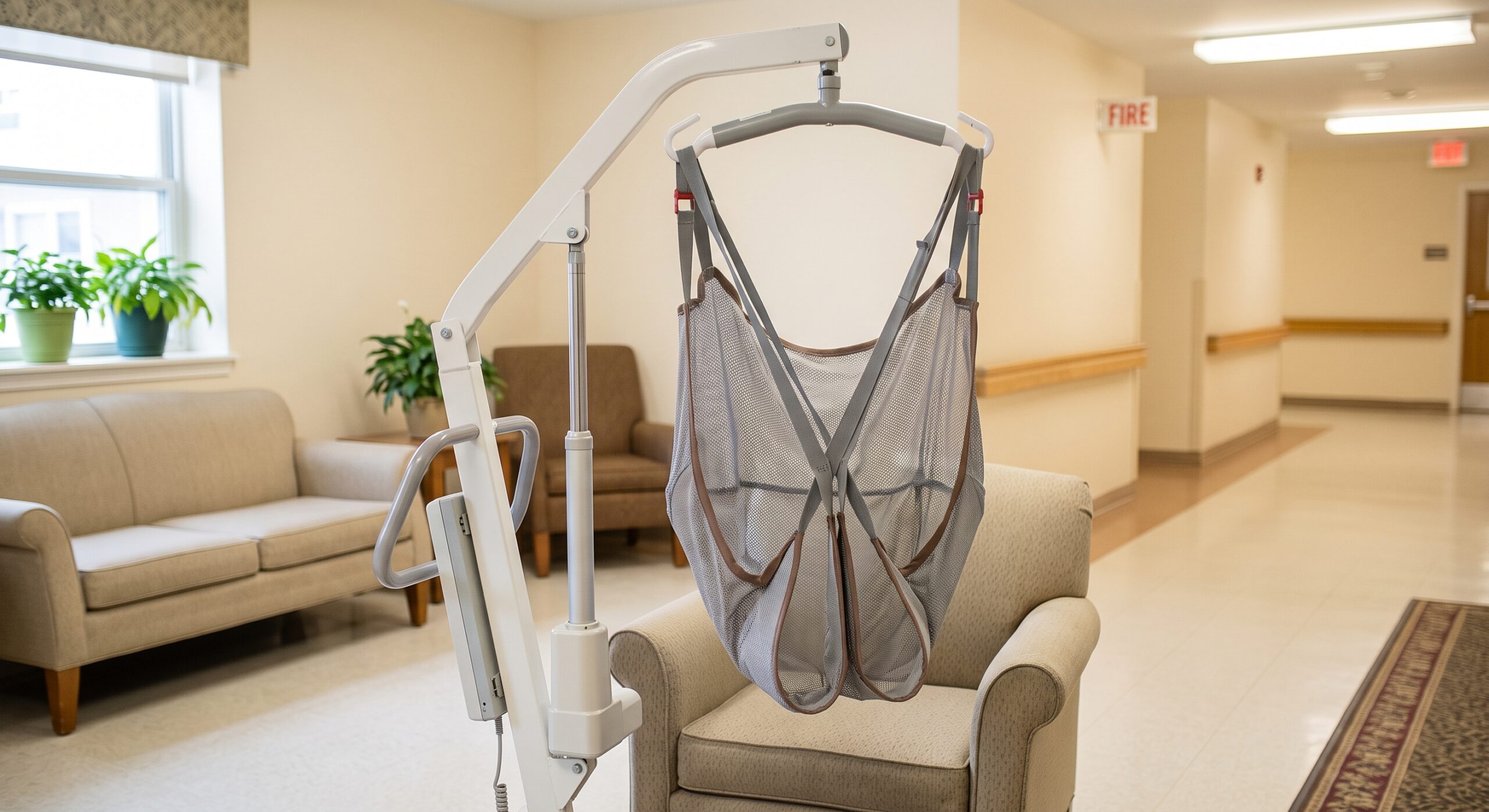
Mechanical lifts—often referred to by the popular brand name Hoyer lift—are used in nursing homes and other long-term care settings to assist residents who cannot safely transfer themselves. Depending on the resident’s needs and the type of equipment, a mechanical lift may be used to move a resident between a bed, wheelchair, shower chair, or other surface.
When used according to the resident’s care plan, equipment instructions, facility procedures, and applicable safety requirements, mechanical lifts can help reduce the risk of injury during transfers. However, problems involving equipment, training, staffing, sling selection, or care-plan compliance can contribute to serious injuries.
If your family is dealing with the aftermath of a mechanical-lift accident, this guide explains how these incidents may occur, the injuries that can result, and the factors that may be relevant when determining whether someone may be legally responsible.
What Is a Hoyer Lift and How Is It Used?
A Hoyer lift is a type of mechanical lifting device designed to assist with the transfer of residents who have limited mobility or who cannot safely bear their own weight. The resident is generally supported by a sling attached to the lift before being raised, moved, and lowered by trained caregivers.
Facilities may use several types of mechanical transfer equipment, including:
- Full-body floor lifts: These support the resident in a sling and can be used when the resident has little or no ability to bear weight.
- Sit-to-stand lifts: These are designed for residents who retain some weight-bearing ability and can assist with standing transfers when clinically appropriate.
- Ceiling-mounted lifts: These systems use a track mounted to the ceiling and can move residents along a designated path.
- Bariatric lifts: These are designed for residents whose size or weight requires equipment with a higher weight capacity.
The appropriate equipment depends on the resident’s condition, care plan, weight, mobility, and other circumstances.
Standards for Safe Operation
Safe mechanical transfers generally require attention to several factors, including:
- Appropriate sling selection: The sling should be appropriate for the resident and compatible with the lift being used.
- Pre-transfer inspection: Staff should follow applicable procedures for inspecting the lift, sling, straps, hooks, clips, and other components before use.
- Adequate staffing: The number of trained caregivers required for a transfer may depend on the resident’s care plan, facility policy, equipment instructions, and the circumstances of the transfer.
- Care-plan compliance: Staff should follow the resident’s individualized plan of care and applicable facility procedures concerning transfers and mobility assistance.
If staff members fail to follow applicable procedures, use inappropriate equipment, or perform a transfer without the personnel required by the resident’s care plan or facility procedures, those facts may become important when investigating an injury.
How Do Hoyer Lift Accidents Happen?
A mechanical-lift injury can have many possible causes. Potential contributing factors include:
- Improper sling selection or attachment: A sling may be inappropriate for the resident, incompatible with the equipment, damaged, or improperly attached.
- Insufficient staffing: A transfer may be performed with fewer caregivers than required by the resident’s care plan, facility policy, equipment instructions, or circumstances.
- Inadequate training: Staff may lack appropriate training concerning the lift model, sling, or transfer procedures.
- Equipment-maintenance problems: Worn straps, damaged components, battery problems, hydraulic problems, or other equipment issues may contribute to an accident.
- Rushed transfers: Time pressure or staffing difficulties may contribute to unsafe practices.
- Failure to follow the care plan: Staff may fail to follow documented transfer requirements.
- Equipment defects: A manufacturing or design defect may potentially contribute to a mechanical failure even when the equipment is used properly.
A transfer accident should not automatically be assumed to have been caused by negligence. Determining whether an injury was preventable requires examining the specific circumstances of the transfer, the resident’s care plan, the equipment involved, the training of the staff, and other available evidence.
Common Injuries from Hoyer Lift Drops
A fall during a mechanical transfer can cause significant trauma, particularly in older adults and other medically vulnerable residents.
Potential injuries include:
- Hip and pelvic fractures: These injuries can substantially affect mobility and independence.
- Head and brain injuries: A resident may suffer a concussion, traumatic brain injury, or intracranial bleeding after striking a floor, bed frame, wheelchair, or other object.
- Spinal injuries: Falls can cause vertebral fractures or other spinal trauma.
- Upper-extremity fractures: Residents may fracture a wrist, arm, shoulder, or other bone during a fall.
- Skin tears and bruising: Fragile skin may be particularly susceptible to significant soft-tissue injuries.
- Internal injuries: Some internal injuries may not be immediately apparent and may require medical evaluation and diagnostic imaging.
The Hidden Complications of Transfer Falls
The effects of a serious transfer injury may extend beyond the initial trauma. A fracture or other major injury can interfere with mobility and rehabilitation and may contribute to additional medical complications.
The consequences vary from resident to resident and depend on the severity of the injury, the resident’s underlying health, and the treatment provided afterward.
Who May Be Legally Responsible?
Determining legal responsibility after a mechanical-lift injury requires an examination of the facts and available evidence. Depending on the circumstances, potentially responsible parties may include:
- The nursing home or care facility: A facility may potentially be responsible if evidence establishes that its conduct or omissions breached a legal duty and contributed to the resident’s injury.
- Equipment manufacturers: If a defective lift, sling, or component caused an injury, a product-liability claim may potentially be available depending on the facts and applicable law.
- Third-party maintenance providers: A company responsible for inspecting or maintaining equipment may potentially be responsible if negligent maintenance contributed to the accident.
- Staffing agencies: Depending on the circumstances and applicable law, a staffing agency may potentially share responsibility if the conduct of an agency worker contributed to the injury.
Determining responsibility may require reviewing the resident’s care plan, staffing records, training documentation, incident reports, equipment records, maintenance records, medical records, and other evidence.
This is typically handled by your attorney.
Is a Hoyer Lift Drop Neglect or Medical Malpractice?
A mechanical-lift accident does not automatically establish nursing home neglect or medical malpractice.
The applicable legal theory depends on the facts, the conduct involved, the identity of the responsible party, and whether the conduct falls within Indiana’s Medical Malpractice Act. Indiana courts have recognized that not every negligent act occurring in a healthcare facility constitutes medical malpractice. Courts examine the substance of the conduct and whether it involved health care or professional services requiring professional expertise, skill, or judgment.
For example, an incident involving a nursing home’s failure to maintain equipment may present different legal issues from a claim alleging that a licensed healthcare professional made an inappropriate clinical decision concerning a resident’s transfer.
Because the distinction can affect the applicable procedures and deadlines, the specific facts should be reviewed by an attorney.
Indiana Nursing Home Standards and Resident Rights
Indiana nursing-home residents have important rights concerning safety, care, grievances, and participation in their care.
Indiana’s Department of Health explains that residents have the right to participate in developing and implementing their person-centered plan of care and to receive the services included in that plan. Residents also have the right to a safe environment and to voice grievances without discrimination or reprisal.
Indiana regulations likewise recognize a resident’s right to voice grievances without discrimination or reprisal and require facilities to maintain policies for investigating and responding to complaints and grievances.
These requirements may be relevant when investigating whether a facility appropriately responded to a transfer accident or a family’s concerns.
Red Flags That May Warrant Further Investigation
Certain circumstances may warrant closer examination after a mechanical-lift accident, including:
- Vague or inconsistent explanations: Different accounts of how the injury occurred may raise questions about what happened.
- Staffing concerns: Documentation or statements indicating that the transfer was performed with fewer staff than required by the resident’s care plan or facility procedures may be relevant.
- Care-plan discrepancies: The transfer may not have been performed according to documented requirements.
- Equipment concerns: Frayed slings, damaged components, missing inspection information, or other equipment problems may warrant investigation.
- Missing or incomplete documentation: Gaps or inconsistencies in incident reports, care records, staffing records, or equipment documentation may be relevant.
These circumstances do not by themselves establish negligence. They are potential areas for further investigation.
Steps to Take If Your Loved One Was Injured
If your loved one was dropped or injured during a mechanical transfer, consider taking the following steps:
- Prioritize medical care: Make sure your loved one receives an appropriate medical evaluation. Some injuries may not be immediately apparent.
- Document visible injuries: With appropriate permission, photograph bruising, cuts, swelling, or other visible injuries and record when the photographs were taken.
- Preserve information about the incident: Record the date, approximate time, location, names of staff involved, and what you were told about the incident.
- Request relevant records: Depending on the circumstances, records may include the resident’s care plan, medical records, and incident documentation.
This is typically handled by your attorney when a legal claim is being investigated. - Identify the equipment: Determine, when possible, which lift and sling were used and whether there were any concerns regarding inspection, maintenance, or damage.
- Avoid signing documents without understanding them: If the facility or an insurance representative asks you to sign a statement, release, waiver, or settlement document, consider consulting an attorney before signing.
- Consult an attorney promptly when appropriate: An attorney can evaluate the circumstances, identify potentially responsible parties, and determine what evidence may need to be preserved.
This is typically handled by your attorney.
Indiana Statute of Limitations
Indiana law imposes deadlines for bringing legal claims, but the applicable deadline and procedural requirements can depend on the nature of the claim, the defendant, and whether Indiana’s Medical Malpractice Act applies.
For claims against a health care provider based on professional services or health care, Indiana’s Medical Malpractice Act generally provides a two-year limitations period, subject to statutory exceptions.
However, not every claim arising from an incident at a nursing home necessarily falls under the Medical Malpractice Act. Indiana courts have distinguished medical malpractice from ordinary negligence based on the substance of the conduct involved.
Because missing an applicable deadline can have serious consequences, families should consult an attorney promptly after a serious injury.
This is typically handled by your attorney.
Frequently Asked Questions
Is a Hoyer lift fall always the nursing home’s fault?
No. A mechanical-lift fall does not automatically establish nursing home negligence. The cause of the accident and the responsibilities of the parties must be evaluated based on the individual circumstances.
What should I do immediately after learning about a transfer fall?
Make sure your loved one receives appropriate medical attention first. Document the incident and visible injuries, preserve relevant information, and consider consulting an attorney about obtaining and preserving records.
Can we file a claim if the lift itself was broken?
Potentially. If a mechanical lift, sling, or component failed because of a manufacturing defect, improper maintenance, or another legally actionable problem, a claim may be available depending on the facts.
How can I check whether the facility has a history of violations?
Indiana residents and families can access information concerning nursing-home facilities and may report concerns to the Indiana Department of Health. Indiana’s Long-Term Care Ombudsman Program also assists residents and families with nursing-home concerns.
Can a claim be filed if my loved one passed away after the fall?
Potentially. If an injury contributes to a resident’s death, the appropriate estate or wrongful-death claim may depend on the circumstances and applicable Indiana law. An attorney can evaluate the facts and determine what claims may be available.
Will making a complaint affect my loved one’s care?
Residents have the right to voice grievances without discrimination or reprisal. Indiana and federal nursing-home requirements provide protections concerning resident complaints and grievances.
If you believe your loved one has experienced retaliation, consider reporting the concern to the appropriate regulatory or advocacy agency and consulting an attorney.
How long do I have to file a Hoyer lift injury lawsuit in Indiana?
There is no single answer for every Hoyer lift injury. The applicable deadline can depend on the legal theory, the defendant, and whether the Indiana Medical Malpractice Act applies. Prompt legal review is important because applicable deadlines can be strict.
What happens during a free consultation with Powless Law Firm?
The attorney can review the basic facts you provide, answer questions about the potential legal issues, and explain possible next steps. A consultation does not guarantee that the firm will accept a case or that a particular legal outcome will result.
Disclaimer: This article is provided for general informational purposes only and does not constitute legal advice. The law can change, and the outcome of any particular matter depends on its specific facts and circumstances. Reading this article does not create an attorney-client relationship. If you believe you have a potential legal claim, consult an attorney about your specific situation.
Speak With an Indiana Nursing Home Injury Attorney
A mechanical-lift accident may involve multiple sources of evidence, including care plans, staffing records, training documentation, incident reports, medical records, and equipment-maintenance records.
Powless Law Firm represents clients in Indiana in matters involving nursing home injuries, medical negligence, and related claims. Whether a particular incident supports a legal claim depends on the facts and applicable law.
If your loved one was injured during a mechanical transfer, you can contact Powless Law Firm to discuss the circumstances in a free, confidential consultation.
Contact Powless Law Firm at 877-769-5377 for a free, confidential case evaluation. We never represent nursing homes or insurance companies—we work exclusively for the families.
At Powless Law Firm, we work hard to uncover the truth behind nursing home neglect. We investigate the staffing levels, the corporate ownership structure, and the electronic audit trails of medical records to show exactly how the system failed your loved one. Contact us today at 877-769-5377 for a free, confidential case evaluation.
The Powless Law Firm represents families across Indiana—from Indianapolis to Fort Wayne and Evansville—in cases involving nursing home neglect, birth trauma lawsuits, medical malpractice injury claims. As experienced medical malpractice attorneys in Indiana, we are here to listen to your story and help you find the way forward.
Call (877) 469-2864 now for a free, confidential consultation. There is no fee unless we win your case.