Sepsis Timeline: How Neglect Leads to Septic Shock
When a family member entrusts a long-term care facility with a vulnerable parent or grandparent, they expect basic clinical vigilance, timely medical assessments, and fundamental human care. Few medical emergencies illustrate the consequences of delayed care as clearly as sepsis.
Sepsis is not an unexpected, unavoidable illness that strikes out of nowhere. In the vast majority of long-term care settings, sepsis is a life-threatening, downstream complication of an untreated, localized infection. It is frequently the direct result of delayed recognition—when nursing home staff fail to observe, document, or report the early, visible signs of infection. Within a matter of hours or days, an easily treatable urinary tract infection (UTI), pressure sore, or respiratory illness can cascade into septic shock, multiorgan failure, and wrongful death.
Understanding the clinical timeline of sepsis—and how staff inaction and understaffing accelerate this downward spiral—is essential for families seeking accountability, answers, and legal justice through nursing home abuse and neglect claims.
1. Phase 1: The Initial Localized Infection (Hours 0 to 24) — The Critical Window for Intervention
Every case of sepsis begins with a primary infection somewhere in the body. In long-term care facilities, frail or elderly residents are particularly susceptible to localized infections due to age-related changes in immunity, chronic health conditions, and mobility limitations.
The Most Common Primary Sources of Sepsis in Nursing Homes
- Urinary Tract Infections (UTIs) & Urosepsis: UTIs represent the leading trigger for sepsis in nursing homes. They frequently result from inadequate perineal hygiene, infrequent changing of incontinence garments, or improper management of indwelling Foley catheters (e.g., failing to keep drainage bags off the floor, failing to perform sterile line changes, or leaving catheters in place without medical necessity). When staff ignore unhygienic conditions or fail to recognize signs like foul nursing home odors, severe bacterial escalation occurs. Learn more about how a treatable UTI can turn into fatal sepsis.
- Stage III and IV Pressure Ulcers (Bedsores): Open wound beds exposed to fecal matter or skin flora rapidly become colonized by dangerous bacteria such as E. coli, Staphylococcus aureus, or Pseudomonas. When staff fail to reposition bedbound residents every two hours, turn sheets, or perform ordered wound dressing changes, tissue death (necrosis) creates an entry point for bacteria into the bloodstream. Explore whether pressure sores are a sign of nursing home negligence and review answers to common bed sore questions.
- Aspiration Pneumonia & Respiratory Infections: Elderly residents with dysphagia (swallowing difficulties) require strict feeding protocols, such as upright positioning during meals and remaining elevated for 30–60 minutes afterward. When rushed aides feed residents lying down, food or liquid enters the lungs, leading to rapid bacterial infection.
- Cellulitis and Surgical Wounds: Skin tears, unbandaged abrasions, or surgical site incisions that are neglected or left uncleaned can quickly develop invasive bacterial soft-tissue infections.
The Standard of Care During Phase 1
During the first 24 hours, the infection is typically contained to its source. The standard of nursing care requires staff to conduct routine physical assessments and skin checks during daily hygiene routines, record baseline vital signs (temperature, pulse, blood pressure, respiratory rate), and track fluid intake, urine output, and bowel movements. Furthermore, nurses must notify the attending physician or nurse practitioner immediately upon observing early signs of infection so that diagnostic labs (urinalysis, blood cultures, wound swabs) and targeted antibiotics can be initiated promptly.
How Neglect Occurs in Phase 1
In an understaffed facility, Certified Nursing Assistants (CNAs) and Licensed Practical Nurses (LPNs) are overwhelmed. Aides may rush through morning care without inspecting skin, ignore foul-smelling or cloudy urine, or fail to notice that a resident ate zero meals. The vital window where simple oral antibiotics could resolve the infection passes without any medical action.
2. Phase 2: Systemic Inflammatory Response & Early Sepsis (Hours 24 to 48)
If a localized infection is ignored or untreated, bacteria proliferate and enter the circulatory system, or release toxins (endotoxins/exotoxins) that trigger an overwhelming immune response. Rather than fighting only the site of infection, the immune system releases massive amounts of inflammatory chemicals (cytokines) into the bloodstream. This hyper-inflammatory state triggers Sepsis.
Pathophysiology of the Sepsis Cascade
The immune system’s aggressive reaction damages the body’s own blood vessels. Vascular walls become microscopic “leaks” (increased capillary permeability), causing fluid to escape from blood vessels into surrounding tissues. Blood pressure begins to decline, and microvascular blood clots begin to form, restricting blood flow to critical organs.
Objective Clinical Markers: SIRS and qSOFA
Healthcare professionals use clinical evaluation tools to identify sepsis. Two widely used diagnostic frameworks include:
Systemic Inflammatory Response Syndrome (SIRS) Criteria (2 or more required):
- Body Temperature: Fever higher than 100.4°F (38°C) OR hypothermia below 96.8°F (36°C).
- Heart Rate: Tachycardia exceeding 90 beats per minute.
- Respiratory Rate: Tachypnea greater than 20 breaths per minute.
- White Blood Cell Count (WBC): Elevated (>12,000/µL), dangerously low (<4,000/µL), or >10% immature band forms (bandemia).
Quick Sequential Organ Failure Assessment (qSOFA) (2 or more indicate high risk):
- Altered Mental Status: Any sudden shift in cognitive function, Glasgow Coma Scale score < 15.
- Systolic Blood Pressure: 100 mmHg or lower.
- Respiratory Rate: 22 breaths per minute or higher.
Atypical Presentation in Elderly Residents
A critical area of clinical failure in nursing homes involves a lack of understanding regarding how elderly patients express infection. Older adults frequently do NOT run a high fever. Because their immune systems are blunted (immunosenescence), their body temperature may remain normal or drop dangerously low (hypothermia).
Instead, the primary early sign of sepsis in an elderly nursing home resident is almost always acute altered mental status—sudden onset of lethargy, severe confusion, hallucinations, or unresponsiveness. Untrained or negligent staff frequently dismiss this sharp cognitive decline as “just dementia progressing” or “the resident being stubborn,” missing the life-threatening medical emergency unfolding right in front of them.
3. Phase 3: Progression to Severe Sepsis and Septic Shock (Hours 48 to 72+)
Without emergency room transport, IV resuscitation, and broad-spectrum intravenous antibiotics, sepsis rapidly escalates into Severe Sepsis and Septic Shock. At this stage, mortality rates climb to between 30% and 50%, and can run higher in frail or elderly populations.
Clinical Breakdown of Septic Shock
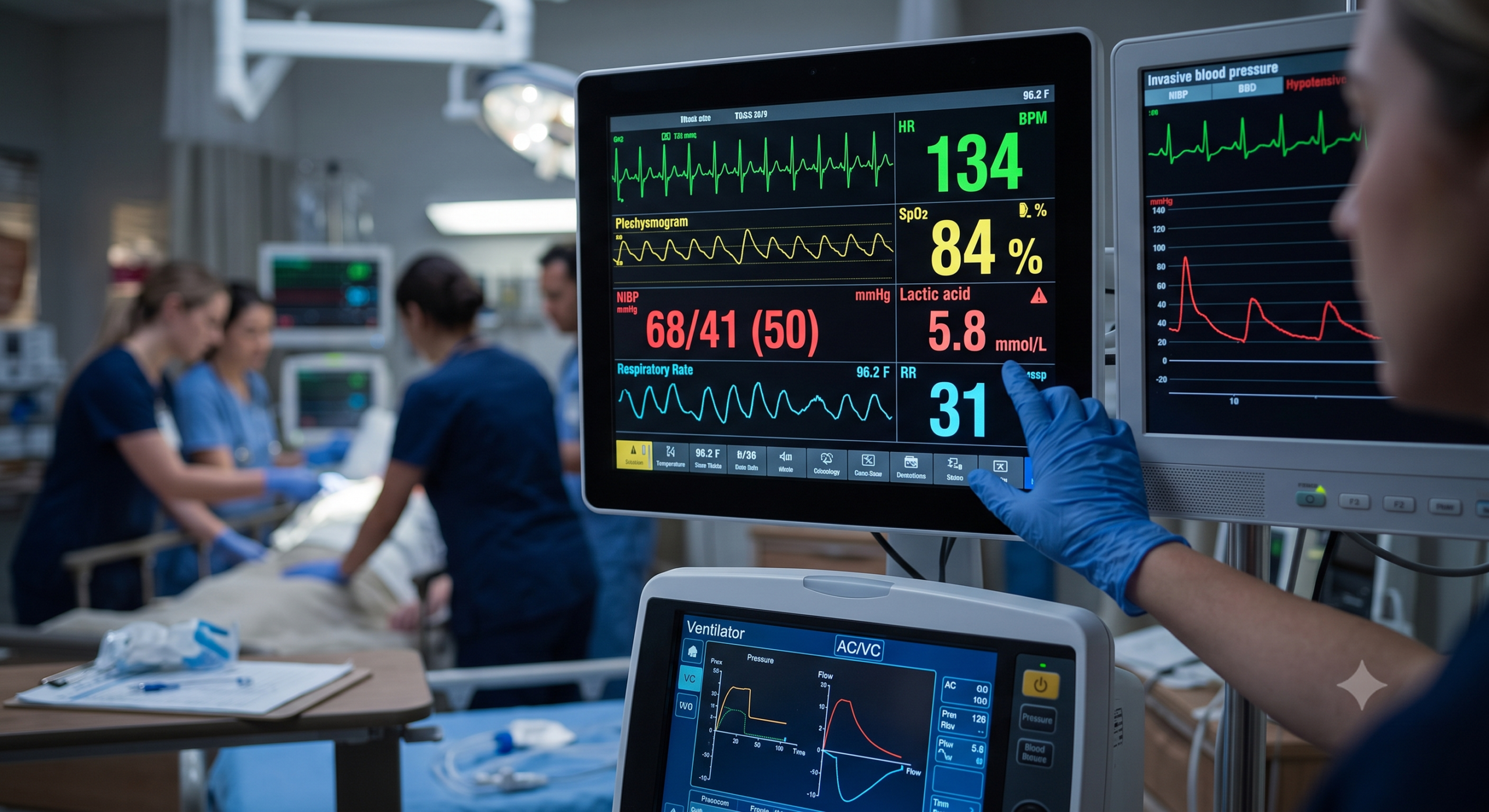
Profound cellular and cardiovascular collapse characterizes septic shock. As blood pressure plummets to dangerously low levels that no longer respond to basic fluid replenishment (refractory hypotension), tissues throughout the body suffer severe hypoxia. Cells are forced into anaerobic metabolism, causing toxic lactic acid to accumulate in the bloodstream, with serum lactate levels climbing above 2.0 mmol/L and often exceeding 4.0 mmol/L in severe shock.
This drop in oxygen delivery can trigger Multiorgan Dysfunction Syndrome (MODS). Acute kidney injury develops as renal blood flow drops, leading to anuria (cessation of urine production), while Acute Respiratory Distress Syndrome (ARDS) sets in as fluid fills the lung alveoli. Simultaneously, Disseminated Intravascular Coagulation (DIC) causes widespread microvascular clotting that depletes the body’s clotting factors, resulting in severe internal bleeding, cyanosis, skin mottling (livedo reticularis), and tissue gangrene.
Understanding the Stages of Sepsis Progression
The progression of sepsis is a predictable clinical decline, beginning with Stage 1 localized infections such as minor skin tears, concentrated urine, or persistent coughing. In this initial phase, the infection is often confined to a specific tissue or organ, presenting with manageable indicators like low-grade fevers or foul-smelling drainage. The standard of care demands immediate action, including rigorous skin checks, consistent vital sign monitoring, and prompt physician notification to initiate lab cultures and antibiotic therapy. When neglect occurs, however, this golden window for easy treatment is lost as the infection spreads unimpeded into the bloodstream.
As the condition advances through Stages 2 and 3 into severe sepsis and eventual septic shock, the body experiences a catastrophic systemic failure. The immune system’s massive cytokine release causes capillary leakage and generalized inflammation, leading to markers such as temperatures above 100.4°F or below 96.8°F, tachycardia, tachypnea, and profound confusion. In the final stage of septic shock, the patient faces refractory hypotension unresponsive to fluids, organ hypoperfusion, and systemic failure, requiring emergency 911 dispatch and intensive care intervention. Failure to provide this standard of care—transferring the resident for life-saving IV resuscitation and mechanical support—directlycan contribute to permanent organ damage, irreversible cellular hypoxia, and, in cases where care fell below the applicable standard, potentially preventable death.
4. How Corporate Understaffing Directly Accelerates the Sepsis Timeline
When investigating nursing home sepsis cases, legal teams consistently find that delayed recognition is not an isolated mistake by a single nurse—it is the direct outcome of corporate decisions that prioritize profits over resident safety. In understaffed facilities, corporate owners routinely cut nursing hours to maximize profit margins, creating unsafe nurse-to-resident ratios and “ghost staffing” where a single CNA is forced to care for 20 to 30 residents per shift. These chronic staffing limitations are compounded by state regulatory frameworks; for instance, examining how state laws impact nursing home RN staffing requirements reveals how systemic understaffing generally increases the risk to residents.
Under these overwhelming conditions, fundamental duties like routine turns, skin checks, and vital sign measurements become impossible to maintain. Overwhelmed staff facing mandatory charting quotas may resort to “ghost charting”—retroactively entering normal vital signs without taking actual readings—which effectively conceals an escalating infection from attending physicians and family members. Read more about how nursing homes try to cover up pressure sores and injuries from families.
This systemic strain is further compounded by high employee turnover and heavy reliance on temporary agency staff, who lack familiarity with a resident’s baseline behavior and easily overlook early warning indicators such as subtle disorientation or refusal of fluids. In some organizational cultures, management even discourages staff from initiating emergency 911 transfers because hospital admissions reduce daily bed-occupancy revenue or trigger state regulatory scrutiny. Together, these corporate operational breakdowns can allow localized infections that would otherwise be manageable to progress into severe, life-threatening illness.
5. Federal Regulatory Standards and Nursing Home Violations (F-Tags)
The Centers for Medicare & Medicaid Services (CMS) mandates strict federal standards for long-term care facilities under Title 42 of the Code of Federal Regulations (CFR) Part 483, requiring nursing homes to maintain rigorous clinical practices. When a facility fails to recognize or promptly treat an escalating infection, state health inspectors frequently cite violations under F684 (Quality of Care), which mandates that residents receive care aligned with professional standards to maintain their highest practicable well-being, and F689 (Free of Accident Hazards and Supervision), which applies when systemic neglect allows avoidable pressure ulcers, aspiration episodes, or severe localized infections to progress unimpeded.
State regulatory surveys also frequently uncover critical non-compliance regarding medication delivery and facility-wide disease control. Investigators issue citations under F755 (Pharmacy Services / Medication Delivery) when nursing staff delay or omit physician-ordered antibiotics for an identified infection, directly enabling bacterial escalation into the bloodstream. Furthermore, citations under F880 (Infection Control) are issued when a facility fails to establish and enforce comprehensive infection prevention programs, transforming routine, treatable conditions into preventable, life-threatening cases of septic shock.
6. Investigating and Proving Sepsis Neglect in Court
To win a nursing home neglect or medical malpractice lawsuit involving sepsis, an attorney must prove three elements: establishing that the facility owed the resident a standard level of care, demonstrating that staff breached this duty through inaction or improper care, and proving that this breach directly caused the infection to escalate into septic shock, severe injury, or wrongful death.
Key Evidence Used to Build a Winning Case
- Electronic Medical Record (EMR) Audit Trails: Modern EMR systems log every keypress, entry, edit, and deletion with millisecond metadata. Audit trails can reveal if a nurse documented vital signs hours after a resident was already transported to the hospital, proving retroactive falsification.
- Hospital Emergency Room Documentation: ER records provide an unvarnished snapshot of the resident’s state upon arrival. If the ER notes document a Stage IV ulcer covered in necrotic tissue, a serum lactate of 5.2 mmol/L, and severe dehydration, it proves the infection was festering untreated in the nursing home for days.
- CMS Payroll-Based Journal (PBJ) Staffing Records: Federal law requires nursing homes to submit direct-care staffing hours. PBJ data can establish that the facility was operating below legal or safe nurse-to-resident ratios during the days leading up to the sepsis event.
- Medical Expert Testimony: Board-certified geriatricians, infectious disease specialists, and nursing experts review the complete timeline to establish exactly when intervention would have prevented septic shock.
Frequently Asked Questions (FAQ)
Can sepsis develop in a nursing home without legal neglect being present?
While infections can occasionally arise even under attentive care, a failure to observe, document, and escalate an infection before it spirals into septic shock often signals a breakdown in professional standards of care, though this depends on the specific facts of each case. If a facility claims sepsis was “unavoidable,” an independent record review often reveals missed red flags and omitted vital sign checks.
How fast can a simple UTI turn into septic shock in an elderly person?
In elderly, frail, or immunocompromised individuals, urosepsis can progress with alarming speed. An untreated UTI can evolve into systemic sepsis and septic shock can progress within as little as 24 to 48 hours in some cases, though the timeline varies by individual health status.
What are the first warning signs of sepsis that nursing home staff frequently miss?
The most commonly missed early sign is sudden cognitive change (confusion, lethargy, difficulty waking, or uncharacteristic agitation). Because elderly residents often do not produce high fevers, staff who wait for a high fever to suspect an infection will miss the critical treatment window.
What damages can a family recover in a sepsis wrongful death lawsuit?
Depending on state law, families can file a wrongful death lawsuit against a nursing home to recover compensation for emergency medical bills, hospital expenses, pain and suffering endured by the resident prior to death, funeral and burial expenses, and loss of companionship. In cases involving gross negligence or intentional record tampering, punitive damages may also be awarded.
What should I do immediately if my loved one is hospitalized with sepsis from a nursing home?
- Take Photos: Photograph any pressure sores, skin tears, unwashed hygiene conditions, or physical signs of neglect immediately.
- Request Complete Records: Request the full medical chart from the hospital ER and intensive care unit (ICU), paying specific attention to blood gas tests, blood cultures, and initial triage notes.
- File a Formal State Complaint: Submit a detailed complaint to your state’s Department of Health or Long-Term Care Ombudsman.
- Consult an Experienced Attorney: Contact a dedicated nursing home neglect attorney immediately so formal evidence preservation letters can be served on the facility before electronic records, security tapes, or staffing logs are altered or discarded.
Contact Powless Law Firm Today
The state and federal laws governing nursing home negligence, clinical malpractice, and regulatory compliance in Indiana are among the most complex in the nation. At Powless Law Firm, we focus our practice on representing families who have been betrayed by the very facilities trusted to care for their most vulnerable members.
We understand that while a financial recovery cannot restore your loved one’s health or erase the trauma of neglect, it can provide the vital resources, specialized care, and peace of mind your family needs to move forward.
If you suspect your loved one is a victim of nursing home abuse or severe neglect in Indiana, do not wait for the state’s timeline to run out.
Contact Powless Law Firm at 877-769-5377 for a free, confidential case evaluation. We never represent nursing homes or insurance companies—we work exclusively for the families.
At Powless Law Firm, we work hard to uncover the truth behind nursing home neglect. We investigate the staffing levels, the corporate ownership structure, and the electronic audit trails of medical records to show exactly how the system failed your loved one. If your family is dealing with the aftermath of a severe pressure sore, contact us today at 877-769-5377 for a free, confidential case evaluation.
The Powless Law Firm represents families across Indiana—from Indianapolis to Fort Wayne and Evansville—in cases involving nursing home neglect, birth trauma lawsuits, medical malpractice injury claims. As experienced medical malpractice attorneys in Indiana, we are here to listen to your story and help you find the way forward.
Call (877) 469-2864 now for a free, confidential consultation. There is no fee unless we win your case.