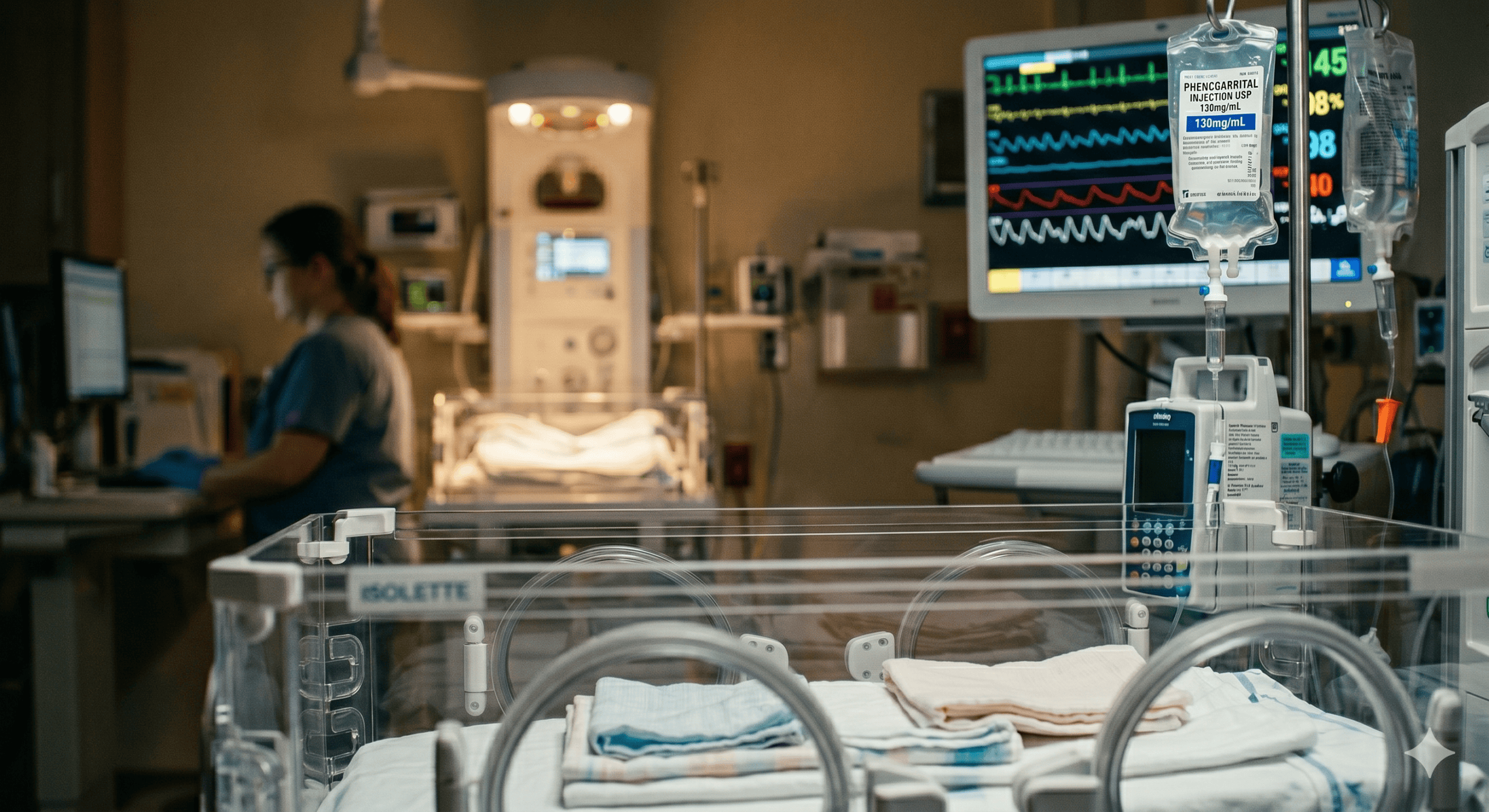
Why Is the NICU Giving My Baby Phenobarbital for Jitters?
A newborn baby trembling, shaking, or twitching in the hospital is an incredibly distressing sight for any parent. In the quiet of the neonatal ward, you may find yourself desperately searching online, asking, “why is my baby shaking in the nicu?” while expecting clear, transparent answers from your clinical care team. Too often, however, parents are met with casual, dismissive reassurances. Medical staff may brush off the trembling as common newborn “jitters,” assuring you it is just a normal, benign part of the baby adjusting to life outside the womb.
But then you look at your baby’s clinical chart, or you witness a nurse administering a medication called Phenobarbital.
If you find yourself in a situation where a doctor says the baby has jitters but gave medicine, a profound, alarming question arises: Why is the hospital treating your baby with a heavy-duty sedative and anticonvulsant? When healthcare providers use harmless-sounding language to minimize severe physical symptoms while simultaneously prescribing heavy medications, it is a form of medical gaslighting in healthcare. Too often, this discrepancy may point to a hidden, terrifying truth: the baby is not experiencing harmless jitters—they are having neonatal seizures caused by a preventable, traumatic birth injury.
Recognizing Possible Medical Gaslighting in the NICU
Medical gaslighting occurs when healthcare professionals downplay, dismiss, or misdiagnose real physical symptoms, making patients or their parents doubt their own observations and intuition. In a NICU environment, this dynamic is amplified by an extreme imbalance of power and clinical information.
For most parents, this agonizing experience begins with a quiet observation. You might notice your baby’s arm twitching rhythmically, their eyes rolling back or staring blankly, or their breathing suddenly pausing. Parents often notice these subtle movements and try to find the difference between baby twitching and seizures in NICU settings. When you anxiously report these events to a nurse or the attending neonatologist, the response can be a reassuring smile and a minimize-first explanation, typically brushing it off as expected transition behavior for an immature nervous system.
The illusion of normalcy breaks entirely when you discover a syringe or an IV line labeled Phenobarbital being administered. When questioned, staff may downplay the heavy drug as a simple, mild sedative to help the baby rest, leaving parents feeling deeply confused.
It is also worth understanding that neonatal seizures do not always look dramatic or even visible. Research shows that fewer than 10 percent of electrographic seizures — those confirmed by EEG — produce clinical signs that are visible to staff or parents. This means that if your baby is on an EEG monitor, the medical team may be detecting and treating seizure activity that appears invisible to you at the bedside. The presence of Phenobarbital does not always correspond to movements you can see; it may reflect abnormal brain activity that only the monitors can detect.
In reality, the doctors are privately treating a major neurological emergency while publicly maintaining a narrative of absolute normalcy. In many cases, this is a defensive mechanism. If a baby begins having seizures shortly after birth, it can be a direct reflection of a potential brain injury that occurred during labor or delivery. By minimizing the symptoms to the parents early on, the hospital attempts to control the narrative, delay your realization that something went catastrophically wrong, and protect themselves from potential medical malpractice liability.
“Jitters” vs. Neonatal Seizures
To protect your child’s health and legal rights, you must understand the clinical reality of neonatal seizures vs jitters. In medical literature, benign tremors are referred to as newborn tremulousness, which is vastly different from actual neonatal seizures. Unfortunately, medical staff may try to blur these lines, but physiologically, they are entirely different events. Understanding Neonatal Seizures: A Critical Red Flag for Brain Injury is vital, as identifying these distinct patterns is often the first step in proving that your baby’s tremors are actually the result of birth-related trauma.
What Are Newborn Jitters?
Newborn jitters are rapid, rhythmic, involuntary shaking movements. They are common in healthy newborns due to an underdeveloped nervous system, mild blood sugar dips, or sudden temperature changes.
- Key Characteristic: Jitters are stimulus-sensitive, usually triggered by a sudden noise, movement, or startle reflex.
- The Holding Test: If you gently hold your baby’s shaking arm or leg, the jitters will stop immediately.
- No Eye Involvement: True jitters do not cause abnormal eye movements, staring spells, or rapid blinking.
- No Autonomic Drops: Jitters do not affect the baby’s heart rate or cause them to stop breathing.
What Are Neonatal Seizures?
Neonatal seizures are a manifestation of abnormal, excessive electrical discharges within the baby’s brain. They are a symptom of an underlying neurological insult or injury.
- Key Characteristic: Seizures occur spontaneously without any external stimulus.
- The Holding Test: If you hold your baby’s shaking limb, the seizure movements will not stop, and the limb will continue to jerk against your hand.
- Ocular Symptoms: Seizures are frequently accompanied by abnormal eye movements, such as a fixed gaze, eyes rolling upward, rapid horizontal eye twitching (nystagmus), or deviation of both eyes to one side.
- Autonomic Spikes and Drops: Seizures often cause sudden, dangerous fluctuations in vital signs, including rapid drops in heart rate (bradycardia), rapid heart rate (tachycardia), or pauses in breathing (apnea) that trigger hospital monitor alarms.
True newborn jitters are fundamentally benign, physical responses to external stimuli such as a sudden noise, touch, or the baby’s own startle reflex. During these episodes, a baby’s vital signs remain perfectly stable, their eye movements are entirely normal, and their brain activity displays no irregularities on an electroencephalogram (EEG). Crucially, these tremors are easily interrupted; if you gently hold the shaking arm or leg, the movement will stop immediately. Because newborn jitters are a harmless symptom of a transitioning nervous system, they require no medical intervention other than basic comfort, warmth, or feeding.
In contrast, neonatal seizures represent a serious neurological emergency caused by abnormal electrical activity in the brain, which can be captured on an EEG. Unlike jitters, seizures occur spontaneously without any external trigger, and the rhythmic jerking or twitching will continue even if you firmly hold the baby’s limb. These episodes are frequently accompanied by abnormal ocular symptoms—such as blank staring, rapid blinking, eye rolling, or eyes deviating to one side—as well as sudden, dangerous drops in vital signs like pauses in breathing (apnea) or a plummeting heart rate (bradycardia). Because of the underlying brain trauma causing these events, they cannot be resolved with comfort alone and require immediate treatment with powerful anticonvulsants like Phenobarbital.
Phenobarbital is NOT for Jitters
The hard truth is that phenobarbital is not a standard clinical treatment for simple, benign newborn jitters caused by an immature nervous system. It is, however, used in a small number of other neonatal situations — including management of opioid withdrawal (neonatal abstinence syndrome) and certain metabolic conditions — so its presence alone does not automatically confirm your baby is having seizures caused by a birth injury. What matters is the specific clinical indication documented in your baby’s chart, which you have every right to ask about and receive a clear answer on. When a baby given phenobarbital in nicu care continues to struggle, parents are left wondering: “Why is the hospital giving my baby seizure medication?” and “Is phenobarbital safe for a newborn?”
Phenobarbital is a powerful barbiturate and a potent anticonvulsant. It is important to note, however, that phenobarbital is not a guaranteed solution — clinical studies show it successfully controls electrical seizure activity in approximately 43 to 80 percent of neonates when used alone, meaning some infants will require additional or alternative medications to achieve seizure control. A baby who continues to show symptoms after receiving phenobarbital is not necessarily evidence of worsening negligence; it may reflect the known and well-documented limitations of the drug itself. It is the primary, first-line medical treatment used to control and suppress active seizures in newborns. It is a heavy central nervous system depressant that works by slowing down brain activity to prevent abnormal electrical surges.
Physicians do not prescribe Phenobarbital for normal newborn transitions, mild fussiness, or benign tremulousness. Phenobarbital baby side effects are significant; the drug can cause profound lethargy, respiratory depression (which often requires the baby to be put on a ventilator or CPAP), and can temporarily mask the baby’s natural neurological reflexes. A medical team would likely only assume these risks if they were certain—or highly suspected—that the baby was experiencing active, dangerous seizures that could cause further brain damage if left untreated.
The 48-Hour Window: Proving an Acute Birth Injury
When a baby begins experiencing seizures within the first 48 hours of life, it is a critical clinical “red flag.” IIn many cases, neonatal seizures in this immediate post-birth window are caused by hypoxic-ischemic encephalopathy (HIE) — making it the single most common cause. However, it is important to understand that a significant number of early neonatal seizures are caused by other conditions entirely unrelated to delivery room events, including genetic disorders, brain malformations, inborn errors of metabolism, prenatal infections, and electrolyte disturbances. A thorough medical and genetic investigation is essential before drawing conclusions about causation.
If your child was placed under a cooling protocol shortly after birth due to lack of oxygen, it is crucial to understand Why Was My Baby Cooled? Therapeutic Hypothermia and HIE, as this high-stakes intervention is reserved strictly for severe neonatal brain injuries.
If you are asking, “can a baby have seizures from a hard delivery?” the medical answer is overwhelmingly yes. Early infant seizures after birth are primary infant brain injury symptoms resulting from trauma or oxygen deprivation during labor.
Other common causes of early-onset neonatal seizures include:
- Intracranial Hemorrhage: Bleeding within or around the brain, often caused by physical trauma in the birth canal. For a detailed breakdown of this condition, see our resource on Newborn Brain Bleeds (ICH): Causes, Symptoms, and Malpractice.
- Cerebral Ischemia (Stroke): Blocked blood flow to a specific region of the baby’s brain during delivery.
- Severe Infection/Meningitis: Sepsis or inflammation of the brain membranes, often resulting from untreated maternal infections.
If your baby was born apparently healthy but was rushed to the NICU and started on Phenobarbital within hours of delivery, it is highly likely they suffered an acute, traumatic neurological event in the delivery room.
How Delivery Room Negligence Causes Brain Damage and Seizures
In many cases, the oxygen deprivation or physical trauma that leads to neonatal seizures is entirely preventable. It is the direct result of medical negligence on the part of the obstetrician, labor and delivery nurses, or hospital staff.
Common delivery room errors that lead to brain injuries and subsequent seizures include:
- Failure to Perform a Timely C-Section: When a baby is in distress, every minute counts. To understand how delays in delivery can cause permanent injuries like HIE, read our comprehensive overview of Delayed C-Sections and Brain Damage: HIE and Legal Rights.
- Mismanaging Fetal Distress: Electronic Fetal Monitoring (EFM) strips continuously track the baby’s heart rate. If nurses and doctors fail to recognize, interpret, or act upon dangerous heart rate decelerations (drops), they allow brain damage to occur.
- Improper Use of Pitocin: Pitocin is a powerful drug used to induce or speed up labor. If over-administered, it can cause “uterine tachysystole” (excessively frequent contractions), which cuts off the baby’s oxygen supply between contractions like a chokehold.
- Instrument-Assisted Delivery Traumas: Excessive force or incorrect placement of forceps or vacuum extractors can cause skull fractures, intracranial bleeding, and direct brain trauma.
- Ignoring Umbilical Cord Complications: Failing to promptly address a prolapsed cord, a cord wrapped tightly around the baby’s neck (nuchal cord), or compression of the cord during contractions. It is also critical to evaluate complications relating to severe high blood pressure, which we detail in our guide on Preeclampsia and Eclampsia: Neglect and Fetal Injury.
The Tactics Hospitals Use to Hide Birth Injury Evidence
When hospital administrators and medical staff suspect a delivery room mistake occurred, they often employ subtle, defensive strategies to control documentation and shield themselves from liability. This frequently begins with selective diagnostics, where providers may delay ordering an electroencephalogram or perform only a brief, routine test rather than continuous neonatal EEG monitoring—allowing them to claim a lack of definitive objective proof.
Furthermore, nurses and doctors may engage in “creative charting,” describing active seizures using benign descriptors like “spells,” “shivering,” “irritability,” or “cycling movements” in the medical record to avoid the legally heavy word “seizure.” This protective charting extends to misrepresenting Phenobarbital itself, noting it as a preventative measure or mild sedative rather than an active anticonvulsant.
Families are often left asking, “how do I know if my baby suffered oxygen deprivation at birth?” especially when a hospital’s own pediatric neurologist or neonatologist attempts to shift focus, blaming the baby’s neurological state on maternal genetics, a hidden prenatal infection, or unexplained developmental anomalies rather than their own failures during delivery.
Pursuing Justice Under Indiana Medical Malpractice Law
Proving that a baby’s seizures and the administration of Phenobarbital were caused by medical negligence requires a highly technical, aggressive legal investigation. To successfully hold negligent healthcare providers accountable under the Indiana Medical Malpractice Act, you need a legal team with specialized medical-legal knowledge. Consulting a skilled Indiana birth injury attorney or a dedicated Indiana medical malpractice lawyer is essential to launching an immediate investigation into your delivery room records before crucial evidence is lost.
In Indiana, malpractice cases must undergo a mandatory review by an independent panel of three healthcare providers and one non-voting attorney who serves as panel chairperson. The attorney manages panel proceedings and advises on legal issues but does not vote on the merits of the claim. The three healthcare providers — who must practice in the same specialty as the defendant when there is a single defendant — cast the deciding votes on whether a breach of the standard of care occurred. If you are considering filing an Indianapolis birth injury lawsuit, a qualified baby brain injury lawyer Indiana trusts will take critical steps to build a bulletproof case.
If your child’s brain injury has led to physical limitations, our guide on Understanding Cerebral Palsy Lawsuits: Legal Options for Parents outlines exactly how families can secure the necessary resources for ongoing care.
This complex legal process begins with securing and auditing the complete medical record, tracking every minute of the mother’s labor, the fetal monitoring strips, and the NICU medication administration logs. For step-by-step guidance on initiating an evaluation, please refer to our resource on How to Determine If You Have a Birth Injury Case. Your legal team must analyze critical diagnostic indicators, such as cord blood gas results taken immediately after birth, which can provide objective chemical proof of severe oxygen deprivation right before delivery. Finally, your attorney will collaborate with top-tier independent medical experts—including pediatric neurologists, neuroradiologists, and obstetrical specialists—to interpret MRI brain scans and EEG recordings to prove exactly when and how the brain injury occurred, and why it was preventable.
If your baby’s seizures were preventable, a birth injury lawsuit can secure the critical financial resources required to cover lifelong therapies, specialized education, medical equipment, and continuous care.
Frequently Asked Questions
How soon after a traumatic birth do neonatal seizures typically start?
Seizures resulting from acute delivery room trauma or oxygen deprivation (HIE) almost always manifest within the first 24 to 48 hours of life. This immediate window is chemically and neurologically critical. While early seizure onset is consistent with a labor and delivery injury, clinical research has found that the timing of neonatal seizures after birth does not, by itself, reliably indicate when or how a fetal neurologic injury occurred. Early seizures are one piece of a broader diagnostic picture that also includes cord blood gas results, EEG findings, MRI imaging, and fetal heart rate records. A thorough, independent medical evaluation is required before drawing conclusions about causation from timing alone..
What should I do if the NICU medical team refuses to show me my baby’s EEG results?
You have a legal right to access your child’s complete medical records, including raw EEG strip data, pediatric neurology notes, and medication logs. If you feel you are experiencing medical gaslighting or if the staff is evading your requests, write down a detailed timeline of your observations and contact an experienced birth injury lawyer immediately. A legal team can formally request and preserve these records before they are edited, lost, or defensively charted.
Does a baby who takes Phenobarbital automatically have a permanent brain injury?
Taking Phenobarbital does not guarantee that a child will suffer permanent developmental delays, but it indicates that a neurological event took place. Long-term prognosis is influenced by multiple factors — including the root cause of the seizures, the severity of any oxygen deprivation or brain bleed, how quickly rescue therapies like therapeutic hypothermia were administered, the total seizure burden detected on EEG, and the pattern of injury visible on MRI. No single factor determines outcome alone, and prognosis can only be meaningfully assessed through a full clinical picture reviewed by a pediatric neurologist. It is also important to know that phenobarbital itself carries documented developmental risks, particularly with prolonged use. Research indicates it may affect synapse maturation and has been associated with impacts on learning and memory in animal models, as well as reduced IQ scores in children given the drug long-term for other conditions. For acute short-term use in the NICU, it is generally considered the safest available option — but the medical team should have a plan to discontinue it as soon as clinically appropriate, ideally before hospital discharge, to minimize exposure. Proactive, independent medical-legal evaluations are crucial to uncovering the true extent of the injury.
Speak with an Indiana Birth Injury Attorney Today
If you felt that something was wrong during your delivery, and you are now being told your baby in the NICU has “jitters” but is being treated with Phenobarbital, trust your parental instincts. You are likely being medically gaslit by a hospital trying to cover up a catastrophic mistake.
You deserve clear, honest, and uncompromised answers about your child’s health and future.
At the Powless Law Firm, we dedicate our practice to helping families navigate the devastating aftermath of medical malpractice and birth injuries across Indiana. We have the experience, the clinical resources, and the relentless drive required to uncover the truth hidden within complex hospital records.
Contact the Powless Law Firm today at (877) 769-5377 for a free, completely confidential consultation. We will review your delivery story, help you obtain your child’s medical records, and fight to ensure your family receives the justice and support you deserve. There is absolutely no fee unless we win your case.
The Powless Law Firm represents families across Indiana—from Indianapolis to Fort Wayne and Evansville—in cases involving birth trauma lawsuits, medical malpractice birth injury claims, and cerebral palsy lawsuits. As experienced medical malpractice attorneys in Indiana, we are here to listen to your story and help you find the way forward.
Call (877) 469-2864 now for a free, confidential consultation. There is no fee unless we win your case.